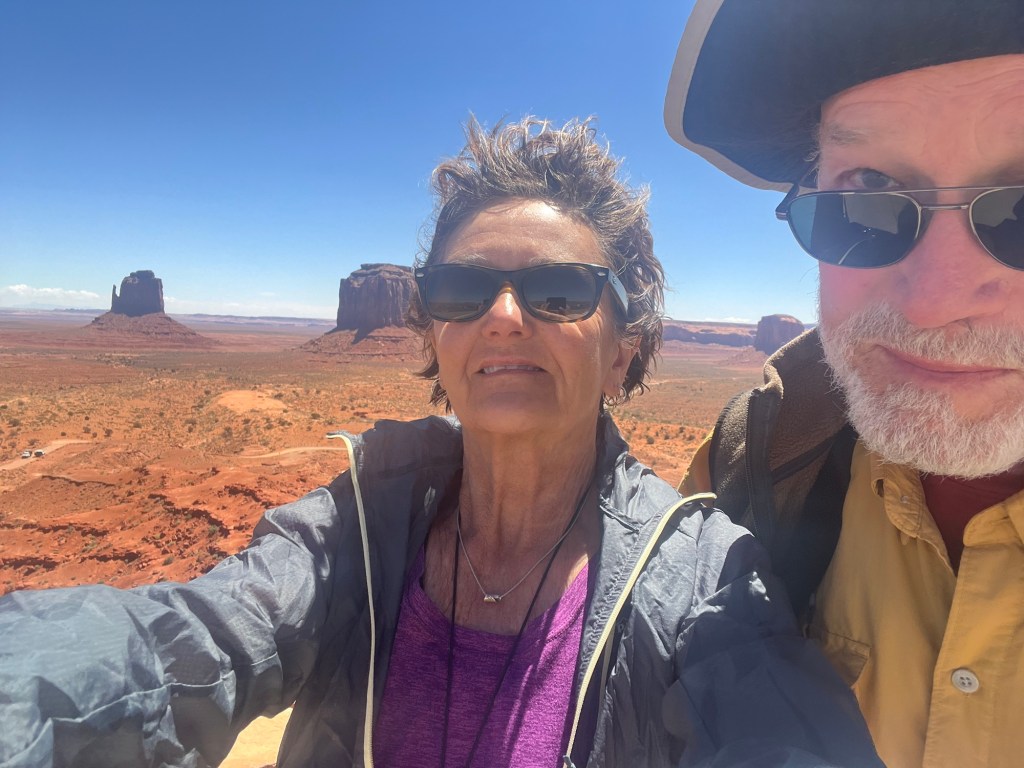
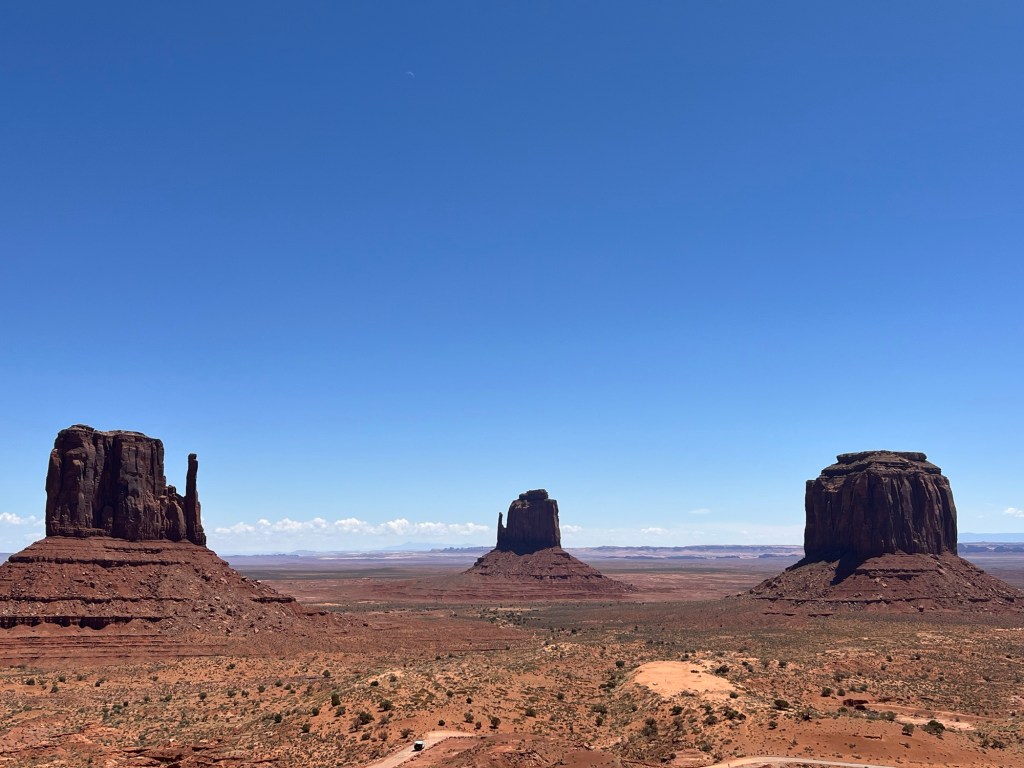
It’s a short drive from our campsite at Canyon de Chelly to Monument Valley Navajo Tribal Park, which is said to be one of the most photographed places on earth. It is quite impressive, to be sure. The visitor center is swarming with tourists and features a rather tacky gift shop.
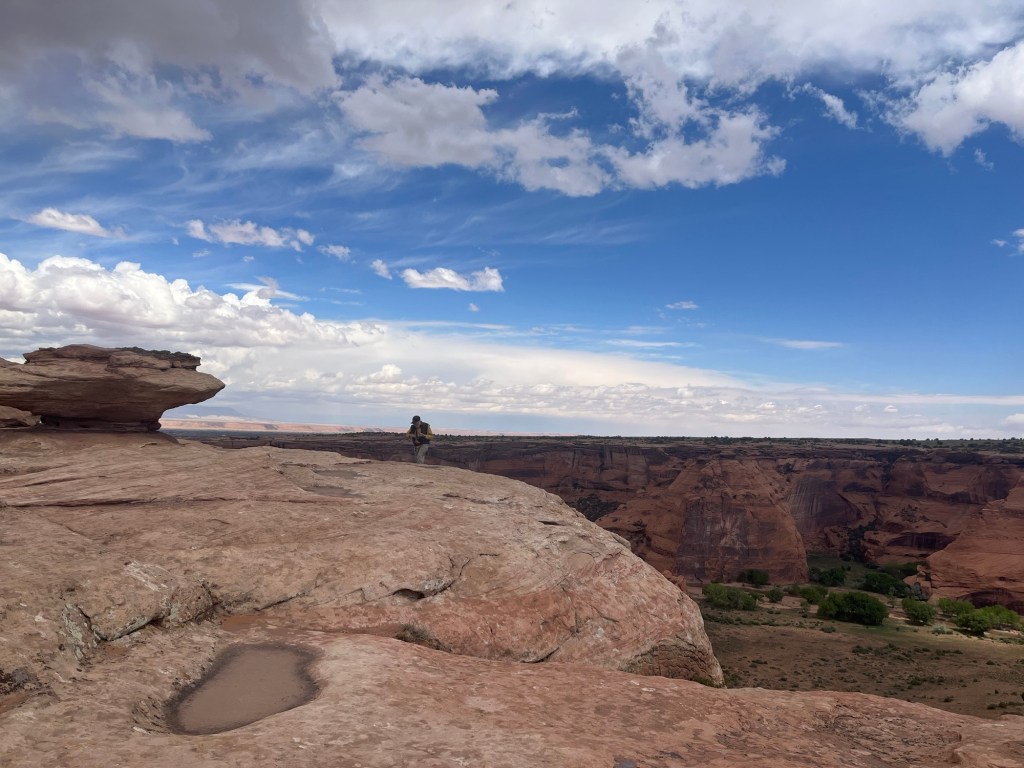
It’s really windy and we’re bad at selfies!
We go down the road to the Navajo Nation visitor center and find a market with vendors selling art made by Navajo and Zuni makers. We had a pleasant conversation with Raymond Valento, a white man married to a Navajo woman-he’s been representing Zuni and Navajo potters, jewelers, sculptors and weavers for over 60 years. We bought some jewelry, of course! Andy picked out a little bear fetish made of jasper as a possible stand in for Buzz Roadkill (nothing can replace him!). These animal carvings have symbolic meanings-in the Zuni tradition the bear guards the West. It is more correct to call these objects carvings rather than fetishes, because they have not been blessed by a shaman.
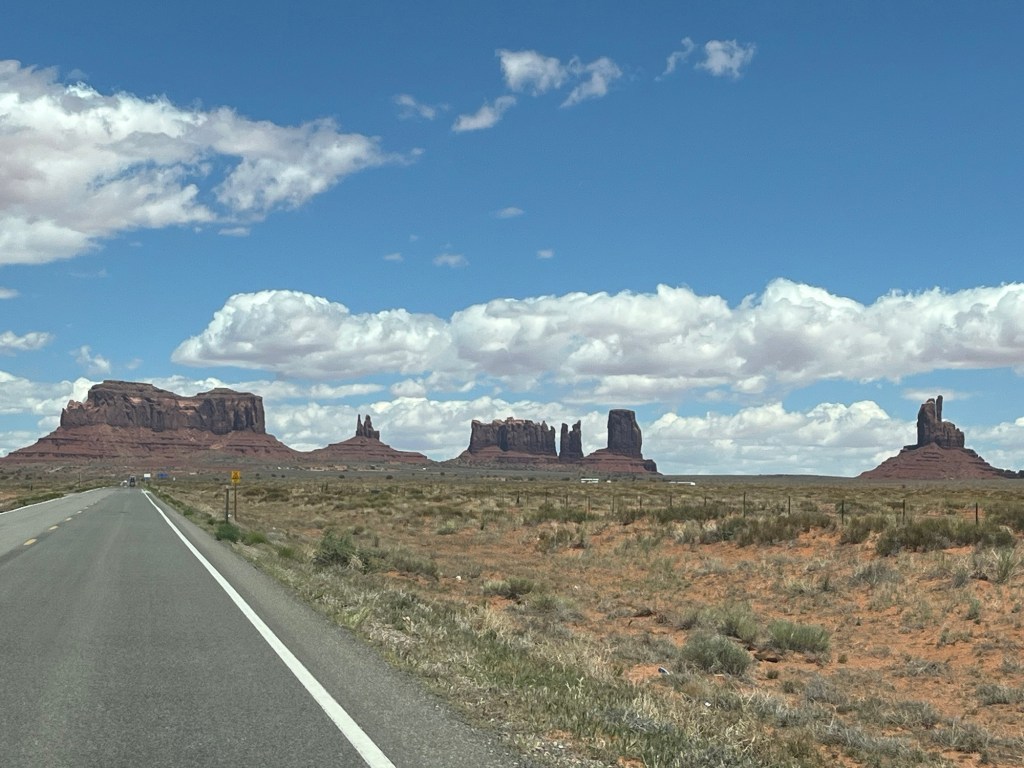
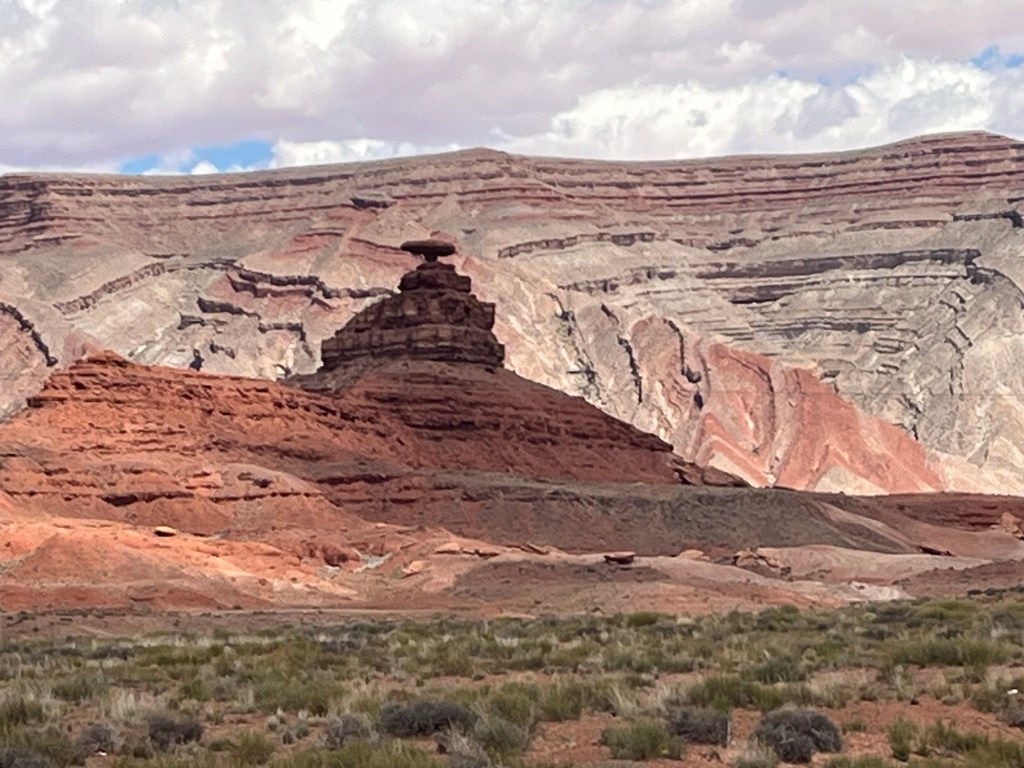
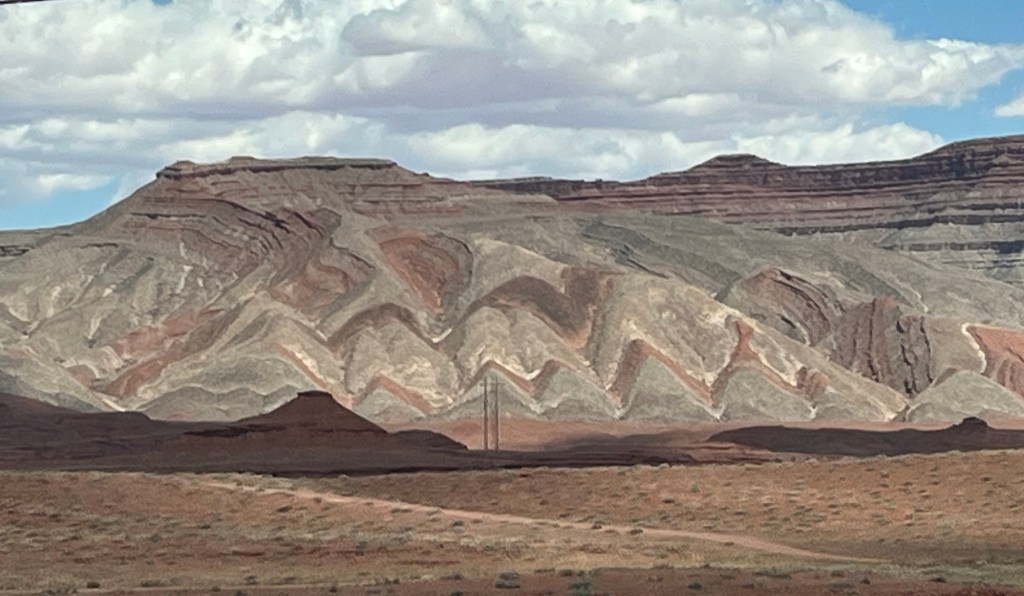
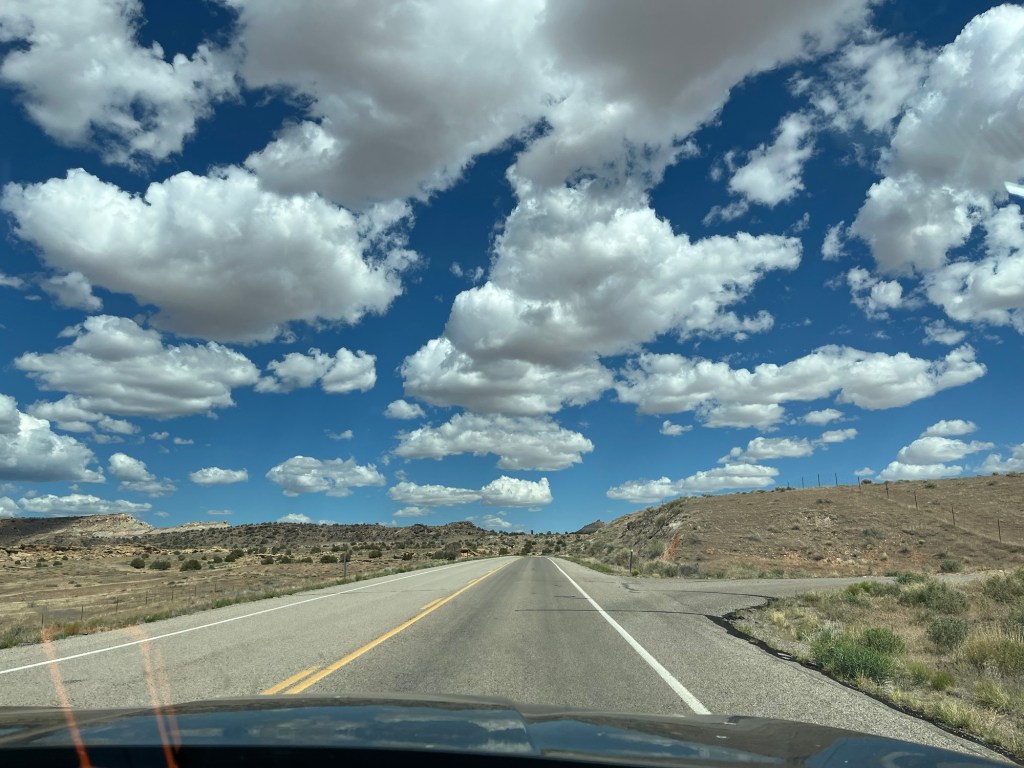
More car shots as we traveled to our next destination. This is Mexican Hat Rock. Unbelievably beautiful!
We spend the night in a motel in Farmington, NJ. We meet a couple from Hancock, Maine! We encounter people from Maine everywhere we go.
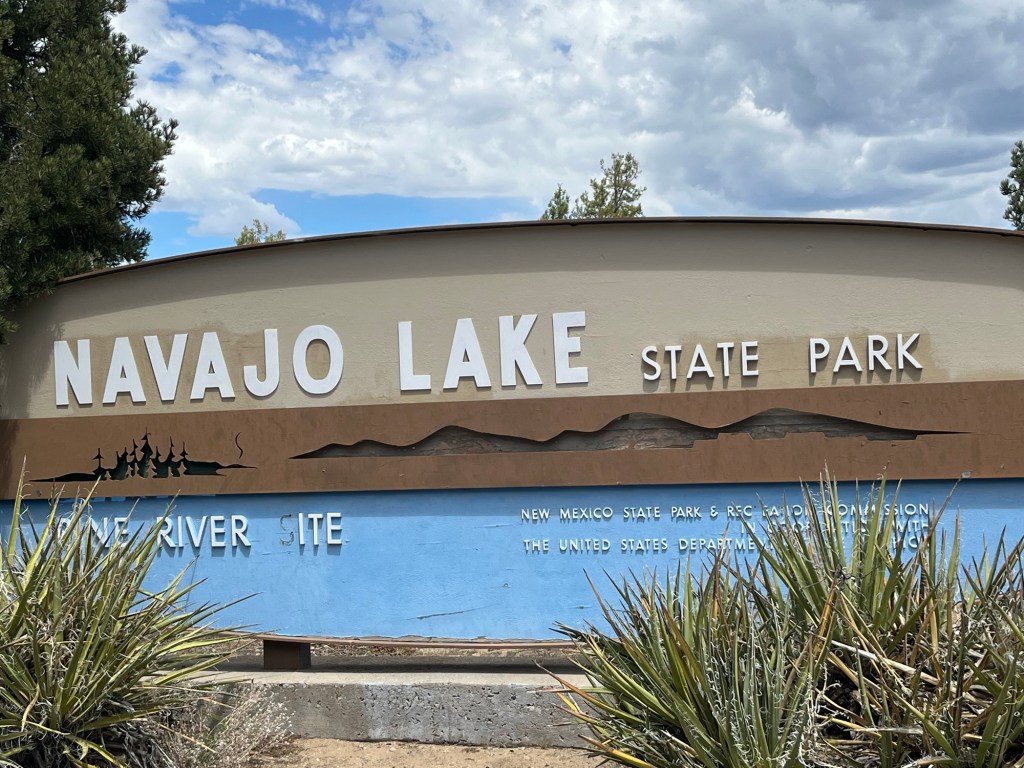
On Monday, our next campsite is a huge state park with several campgrounds and a large marina.
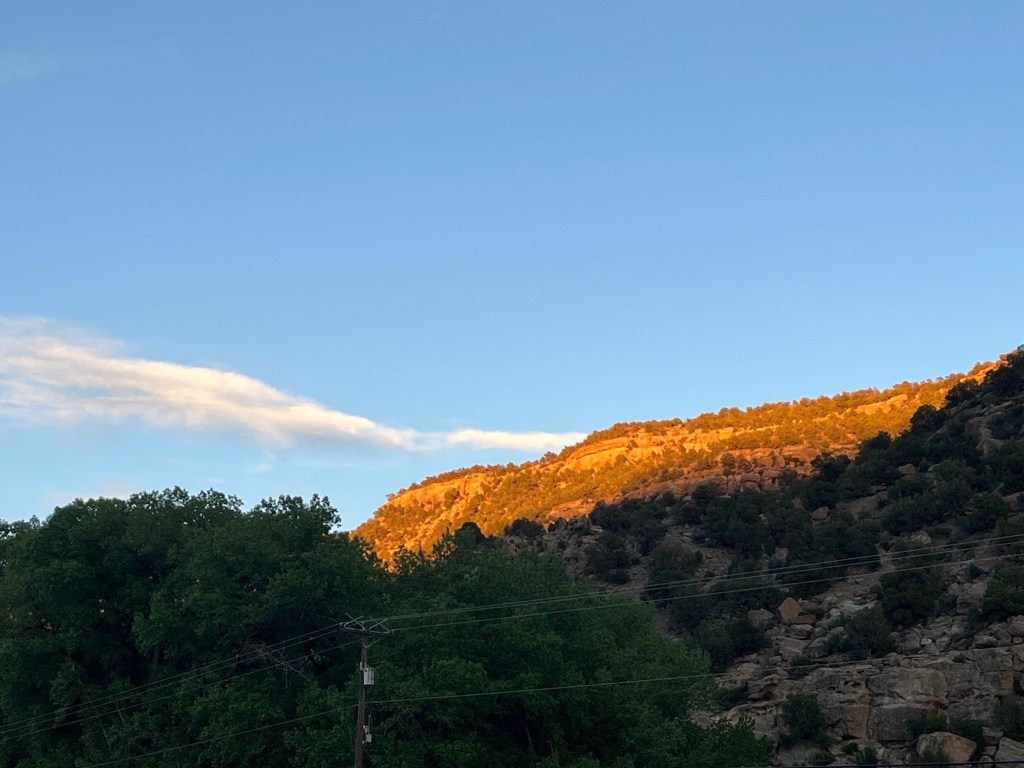
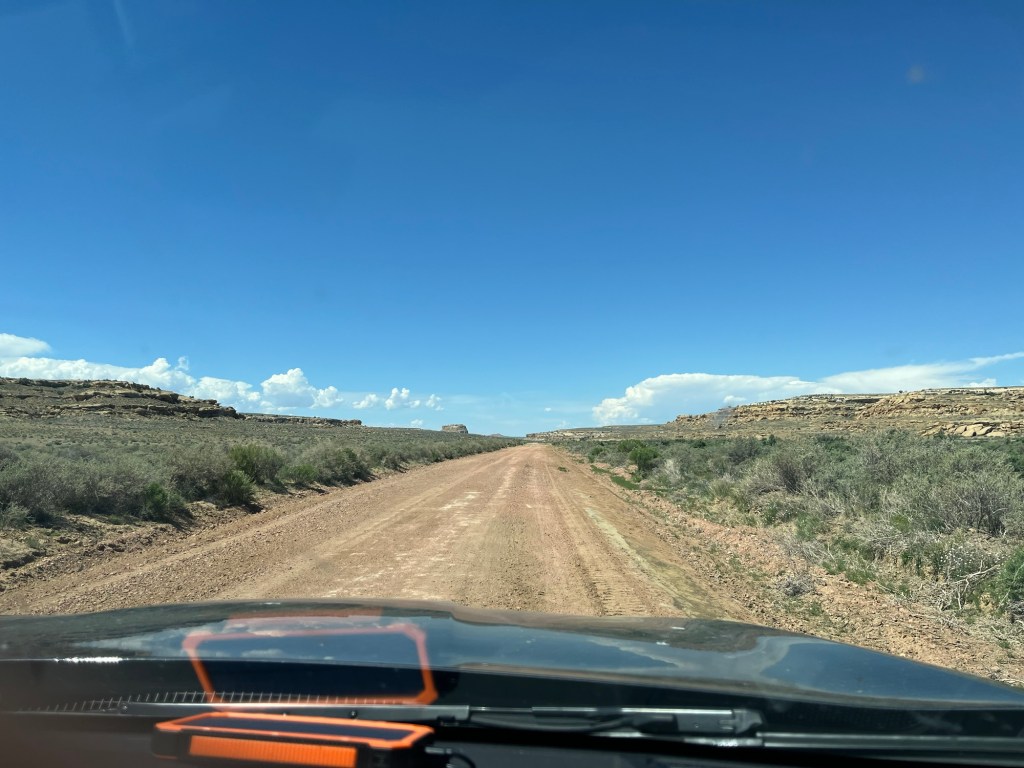
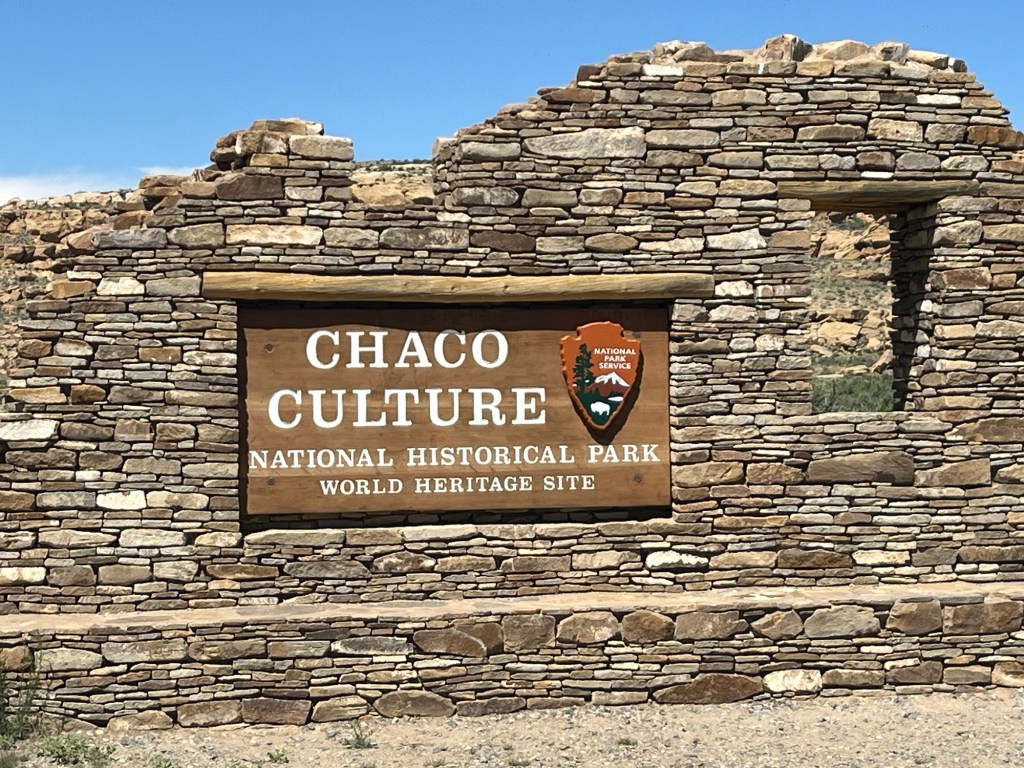
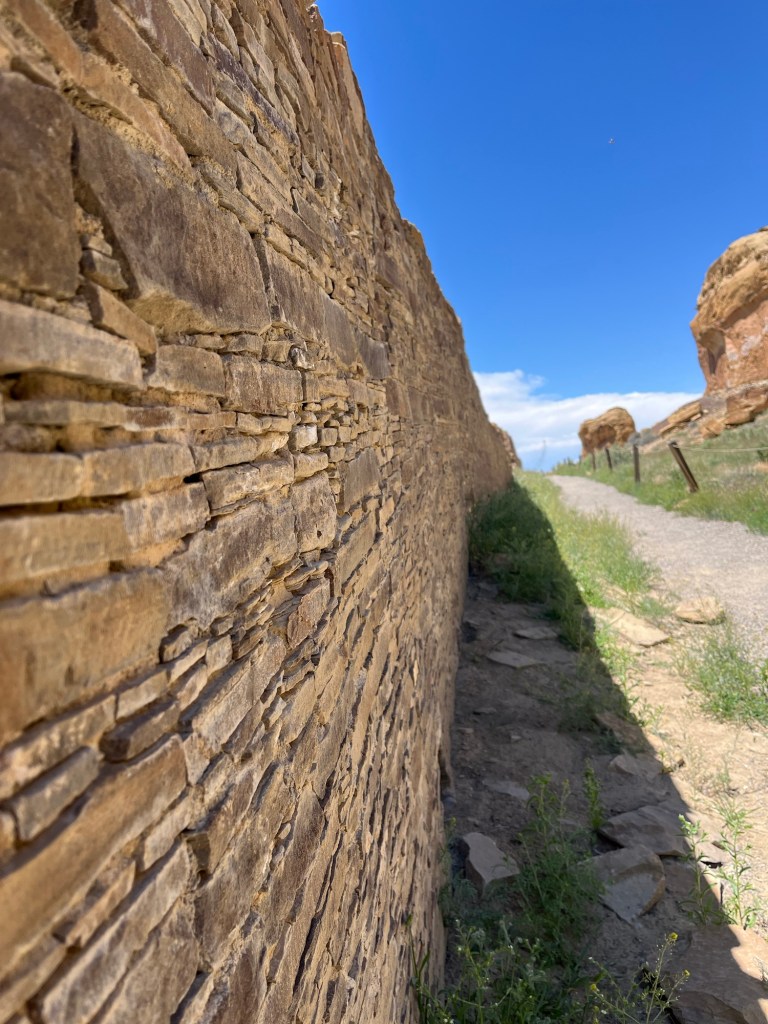
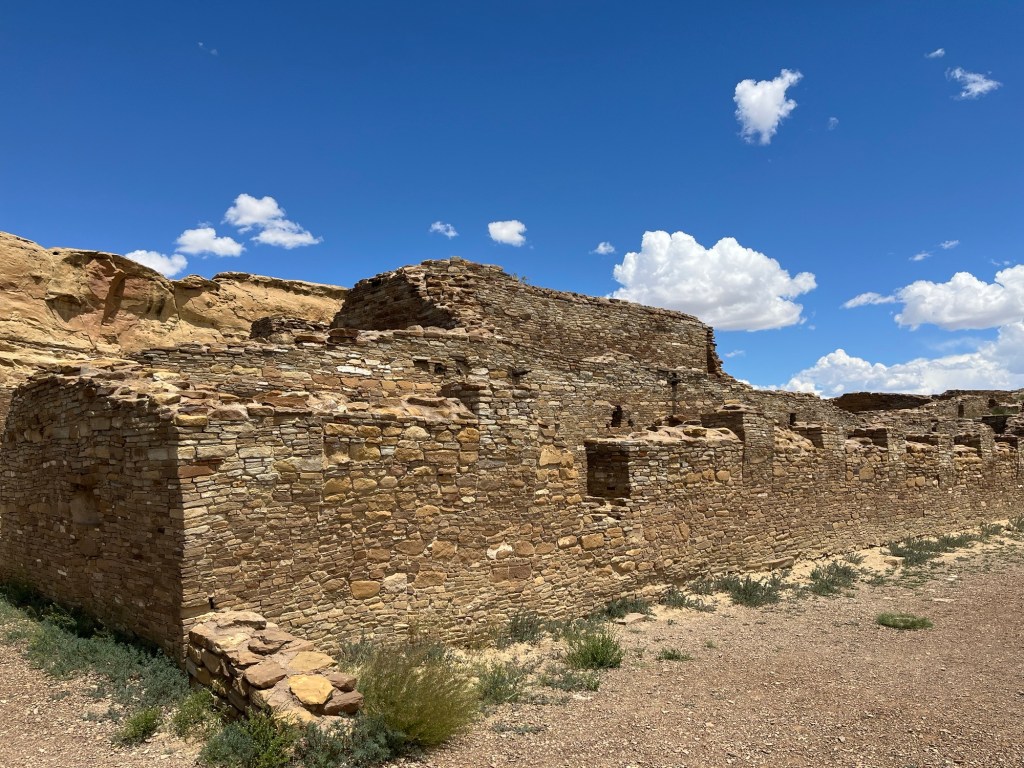
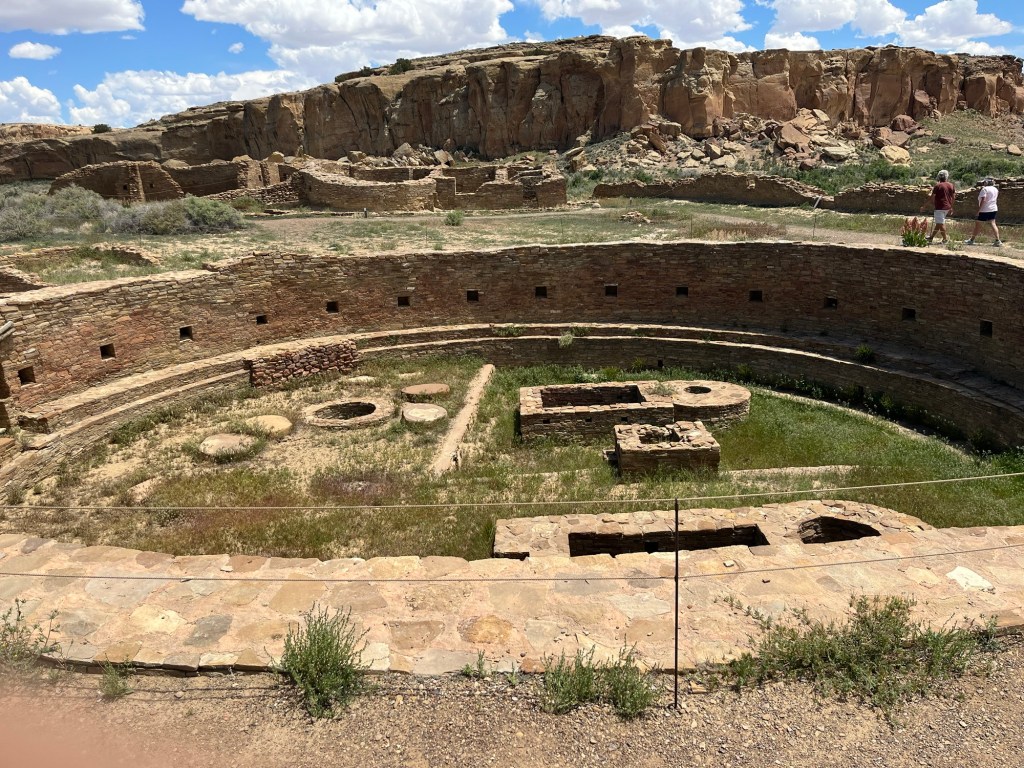
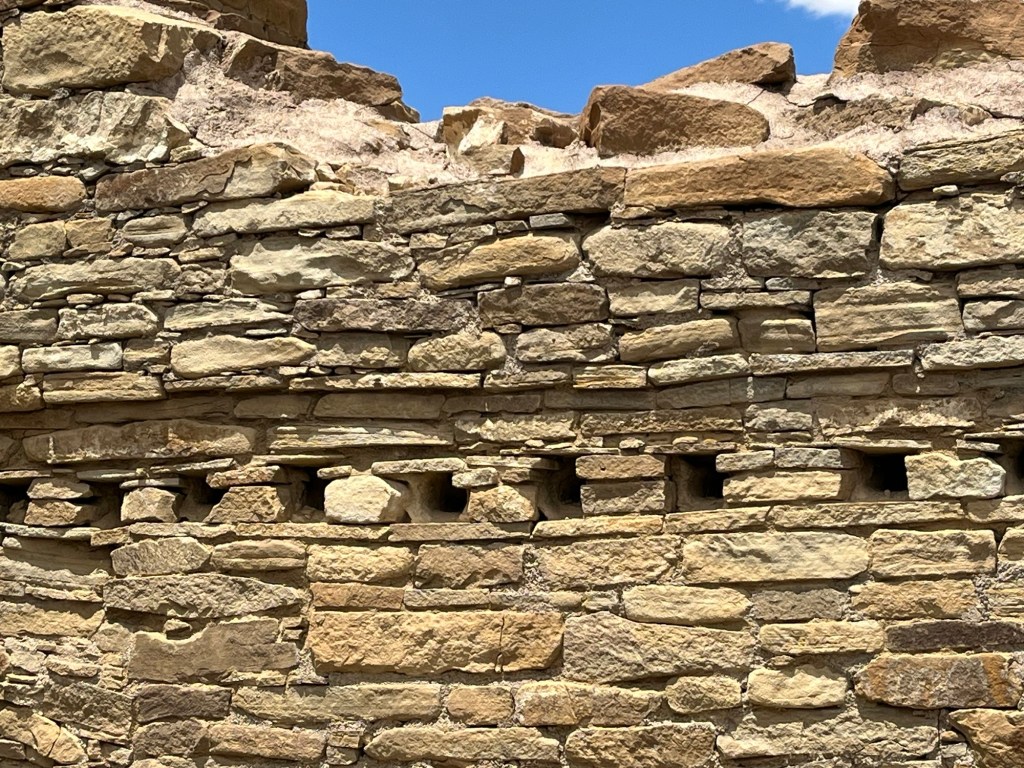
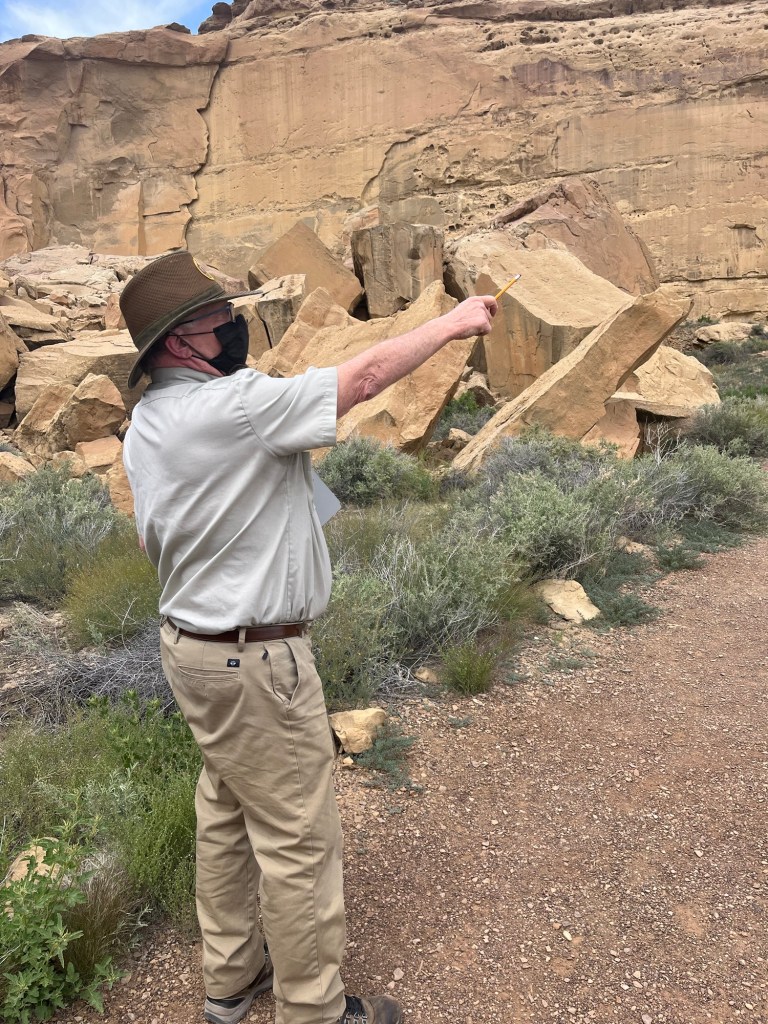
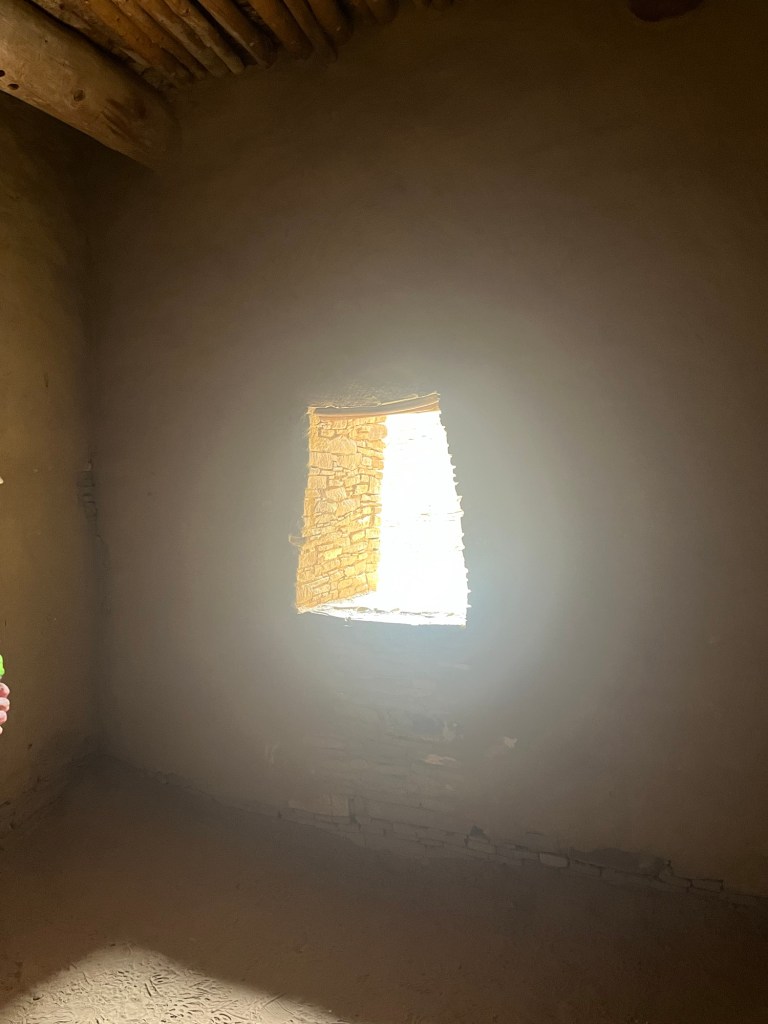
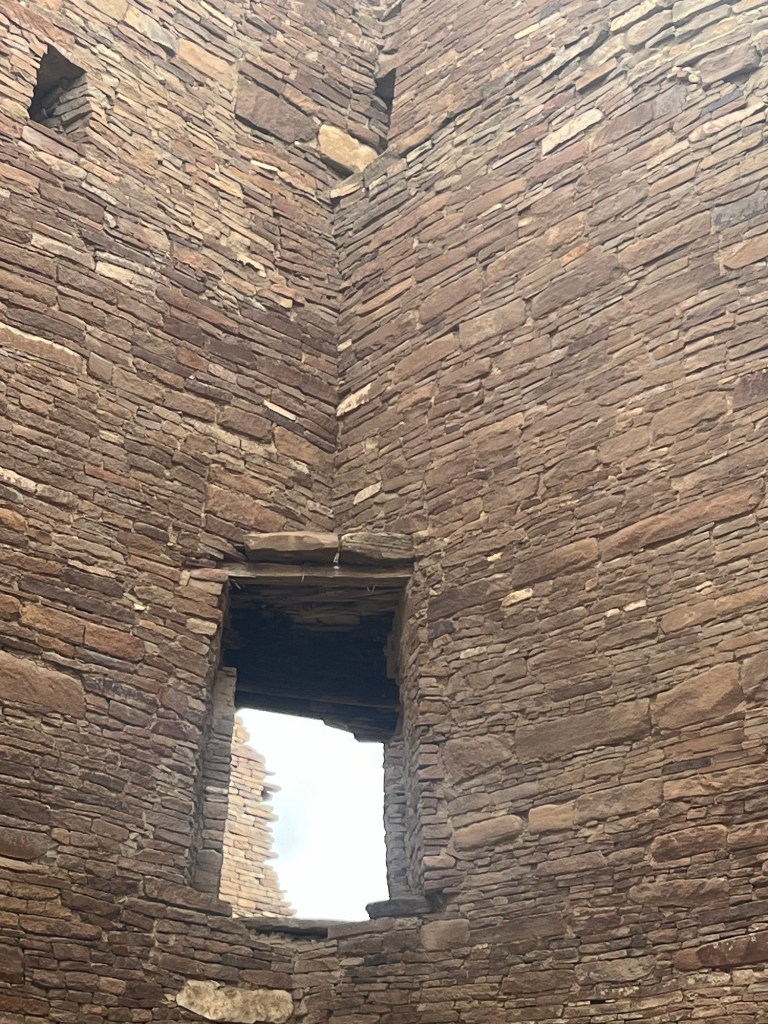
Our campground is Crusher Hole-almost completely empty. There are so many birds here! My Merlin app identifies several species by sound, but they are difficult to sight. We do see ospreys passing overhead with fish in their mouths. This is supposed to be one of the best trout fishing areas in the country. The sunsets are awesome!Monday, we make a day trip to Chaco Culture National Historical Monument. Our tour guide at Canyon de Chelly told us stories of the people who lived here, and we were inspired to visit. In keeping with the theme of our trip, access to this site involves 20 miles of washboard gravel road. I think some of my teeth are getting loose!Chaco Canyon was a cultural center for the Ancestral Pueblo people who lived here from 850 to 1250CE. It served as a hub of trade and ceremony for many peoples who gathered there. This place is central to the origins of several Navajo clans. The great houses of Chaco were constructed during the 800s. They were oriented to solar, lunar, and cardinal directions. Sophisticated astronomical markers, communication features, water control devices, and formal plazas surrounded them. A system of roads connected more than 150 great houses throughout the region. These were not heavily populated villages but may have been used more for ceremony and trading and as impressive examples of “public architecture.” Wood used in their construction would have been hauled by hand from over 50 miles away. Roy took us on a tour of Pueblo Bonita, the largest of the great houses. The public is allowed to follow trails that go around and inside these dwellings. Roy led us through a succession of small doors into small rooms. These corner windows were built to serve as astronomical markers. Two face east and are called solstice windows because they were used to view the sunrise on the winter solstice.
We want to come back to this magical place and spend more time among the ruins and on the numerous hiking trails that we didn’t have time to explore. It’s thought that only about one percent of the dwelling places in this area have been excavated. The Navajo people would prefer that no further excavation be allowed, and I agree. It’s wonderful that we have an opportunity to glimpse a piece of this rich history and fitting that most of it be left undisturbed.
Headed back to Navajo Lake. Every mile is a blessing.
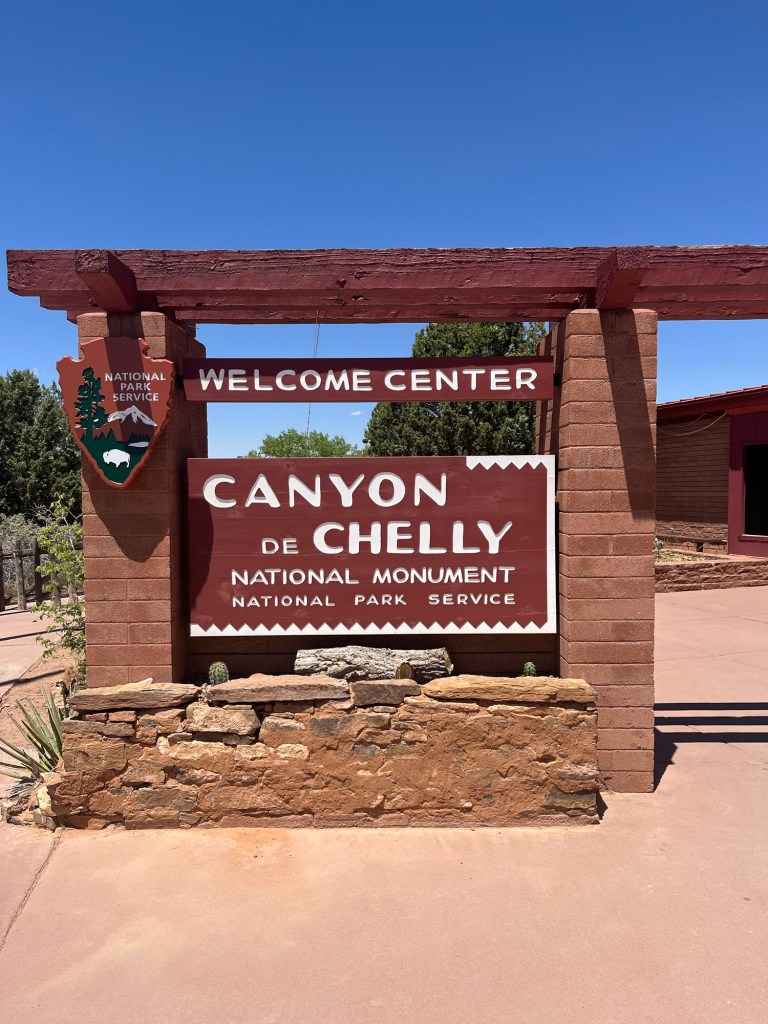
We spent Thursday night in Page, Arizona. Not much to report-it’s near Lake Powell, which we don’t see from our motel room. Friday morning is a lovely drive to Canyon de Chelly (pronounced Chay) National Monument. This is the second largest canyon in the US and is located in the Navajo Nation near the Four Corners region.
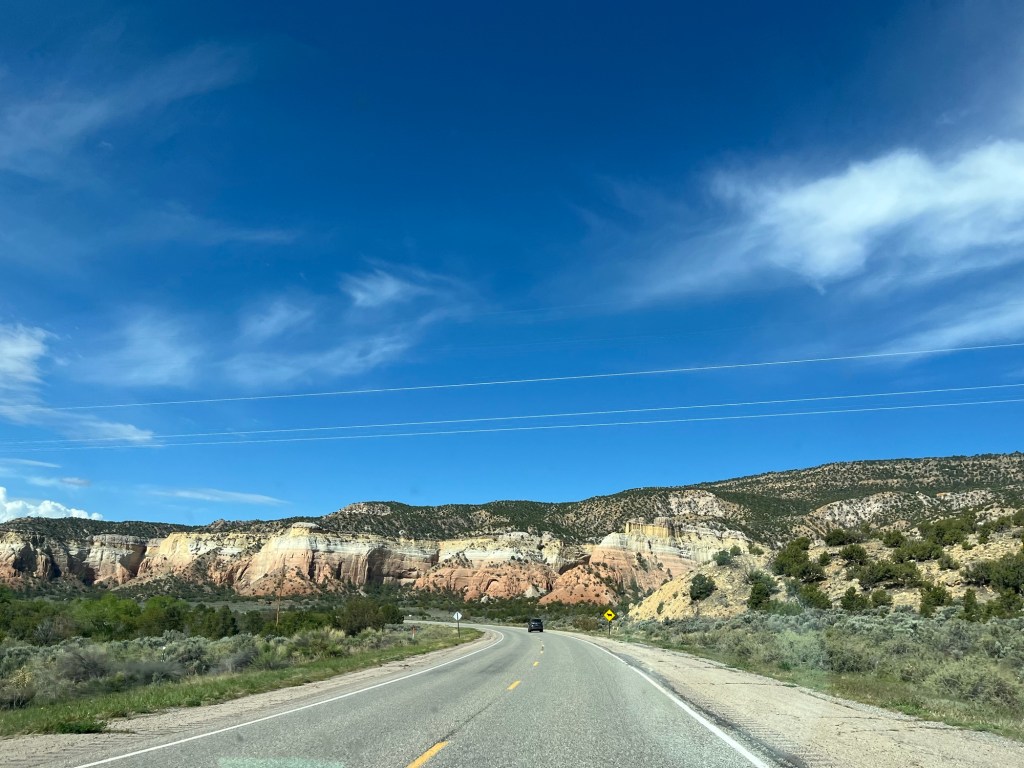
The drive is beautiful.Cottonwood Campground is right behind the visitor center-it’s very quiet and nice to be nestled among the cottonwood trees. We’ve learned that these trees were planted by the CCC to help control erosion in the Canyon, but they are not native and have prevented the growth of other native species such as willows and are therefore being removed in some places.
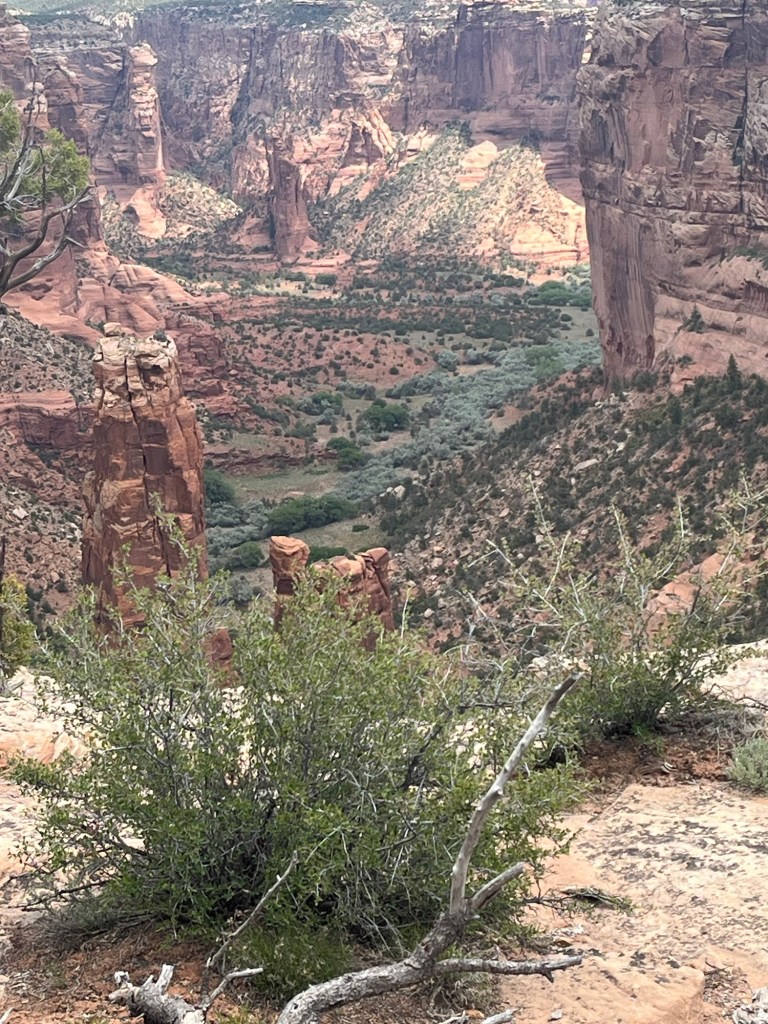
There are no public trails at Canyon de Chelly, but visitors may drive the rim and there are amazing views from the overlooks. We met some Navajo artists selling jewelry and art at some of the parking lots and had a chance to talk to them and buy some of their work.
This is Spider Rock. Navajo legend says that a Spider Woman lived on top of this rock and would take naughty children up there to teach them how to behave. If those children didn’t learn her lessons, she would eat them! Their bones remain to this day-that’s why the top of the rock is white.
To go into the canyon, visitors must have a guide. The canyon is co-owned by Navajo residents and the Park Service. Guides must be Navajo residents of the canyon.
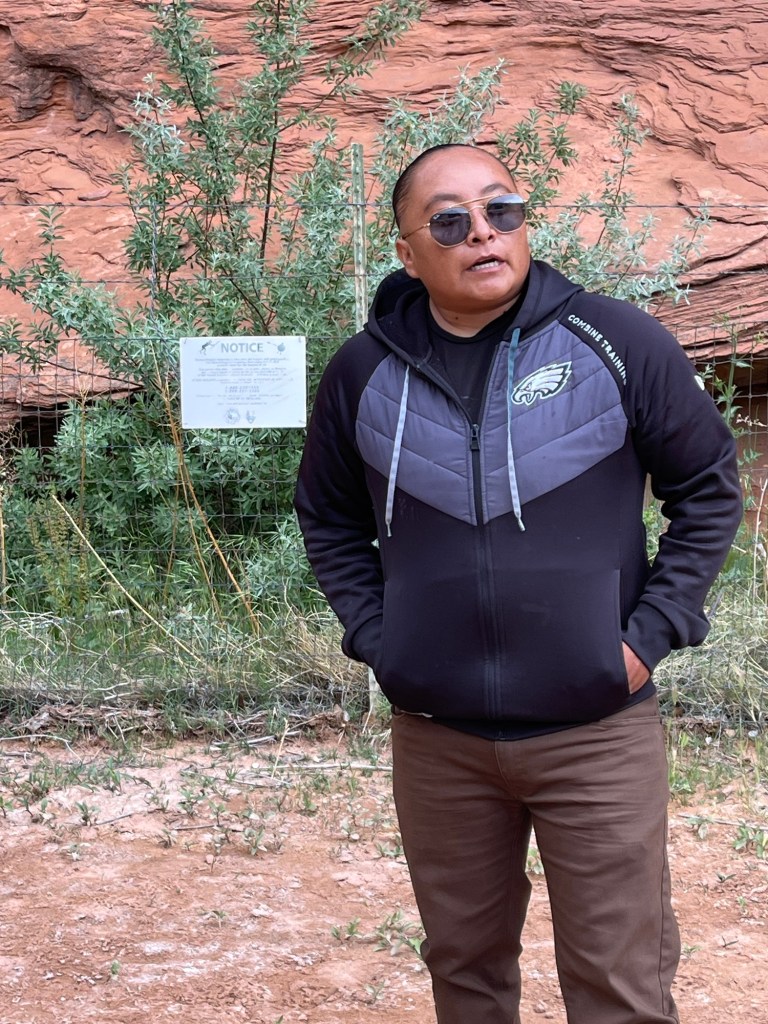
We decided to take a tour, and we are so glad we did. This is Devonnia, our guide. She took us and 3 other people on a 3-hour tour. She grew up in the canyon with her dad and grandparents. Today, there are about 60 families who own property there, but all except one woman live there seasonally. We discovered the reason for this on the tour. The landowners farm and keep sheep and horses, which are brought out of the canyon during the winter. The Navajo tribe is matriarchal. Land is passed on to the oldest woman in the family. In de Chelly, if there is no heir, the land reverts back to the Park Service.
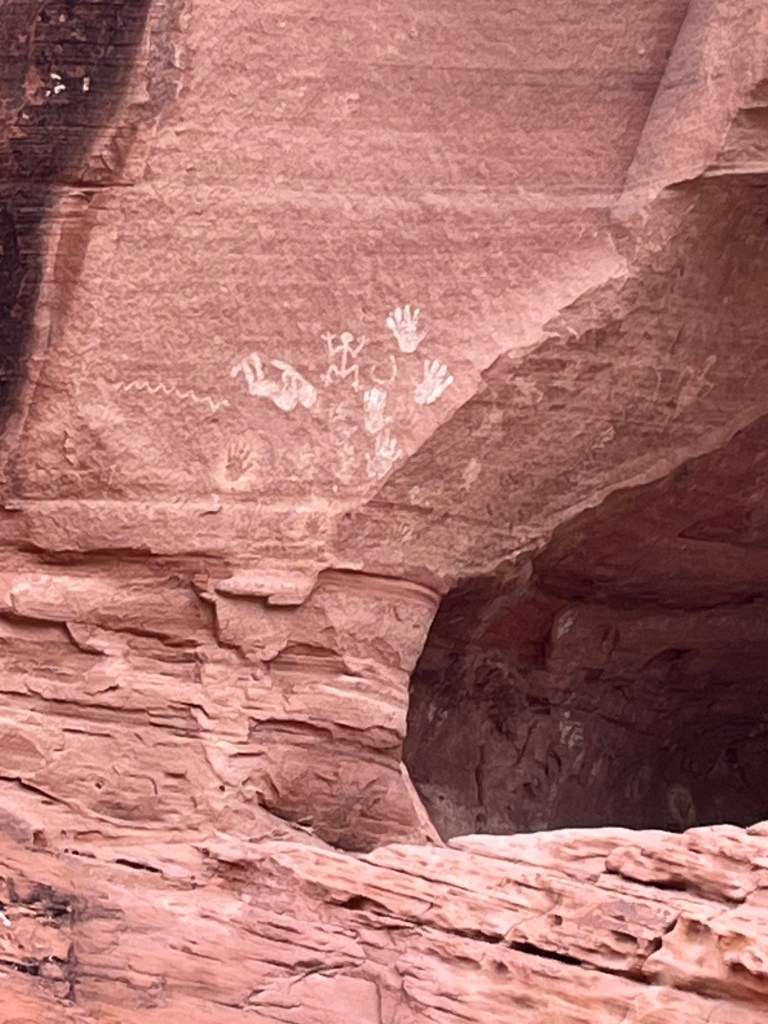
People have lived in this canyon for 5,000 years. The first inhabitants lived in the cliffs from around 2500 to 200 BCE and left images on the canyon walls to tell their stories. This site is thought to have been a birthing place. Kokopelli, the symbol of fertility, is shown here on his back-representing new life. Between 200 BCE and 750 CE a group called the Basketmakers, named for their weaving skills, began to farm and become more sedentary.
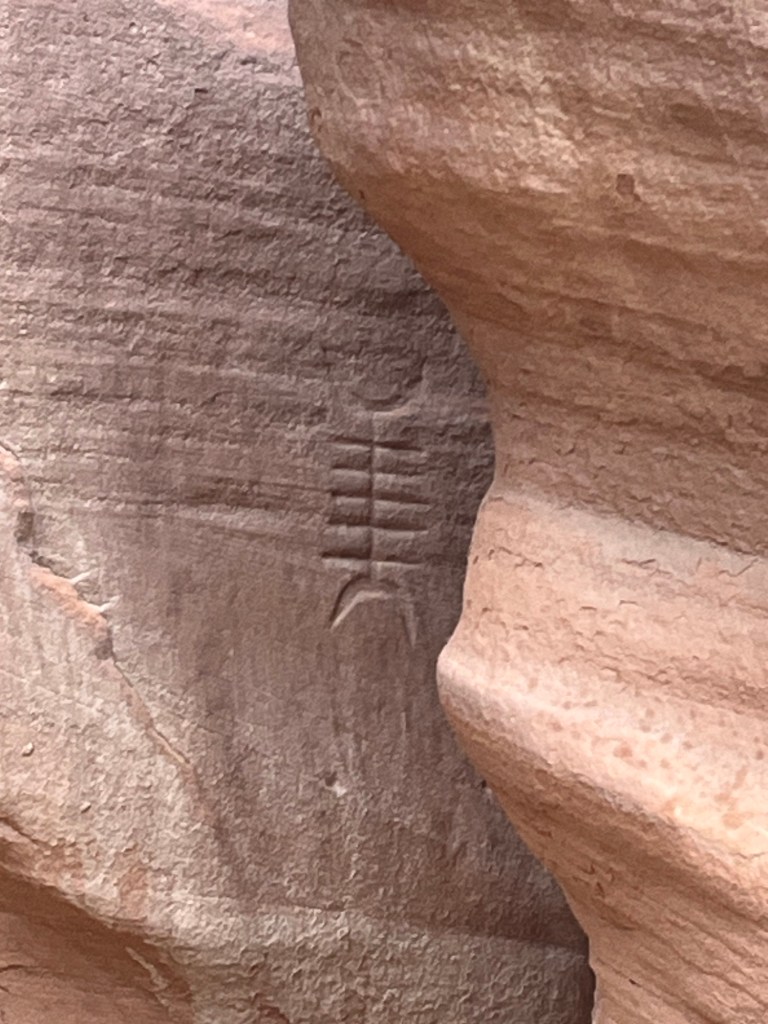
Devonnia pointed out this symbol, which she said was probably left here in the 1940s. It is considered graffiti by archaeologists, but she grew up with its lesson. She drew a picture of it in the dirt and told us the story that her grandmother taught her. It represents the transition from the world into which Navajos are born into the “glitter world” of modern culture. The lines between the two worlds represent culture, language, civility, ego and greed. If younger generations lose their cultural knowledge, their language, and the civility taught by the Old Ones, they will turn to the “me” culture and fall victim to a world of greed and materialism (glitter). Devonnia said she has witnessed the truth of this story in the younger members of the Nation who have fallen victim to drugs and alcohol and have lost their way. As she talked, I felt that this Truth is a truth for all cultures, and I thought about what I was taught as a child- “do not forsake your mother’s teaching,” and other similar Christian scriptures that remind us to hold onto the traditions and the values of our ancestors.
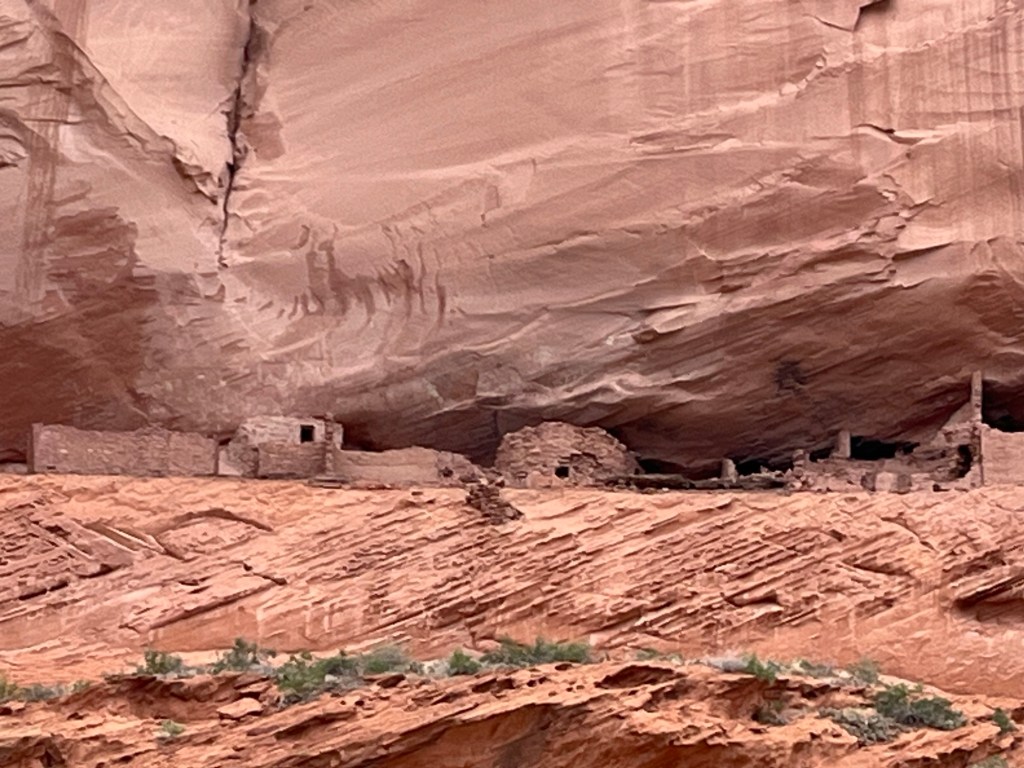
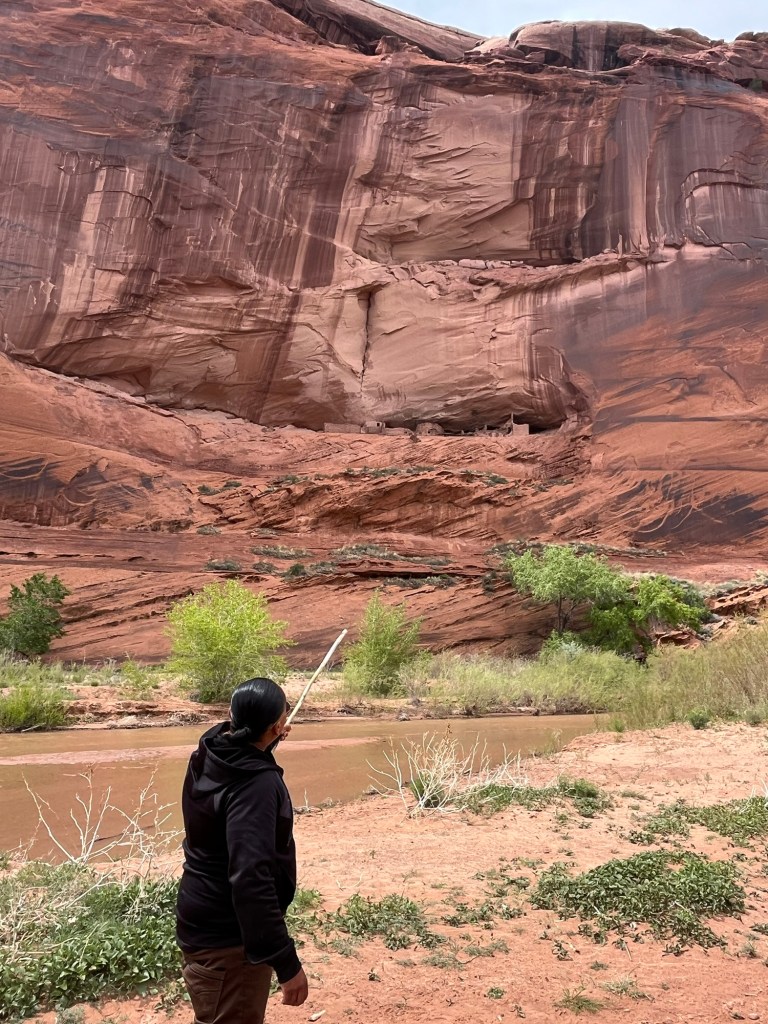
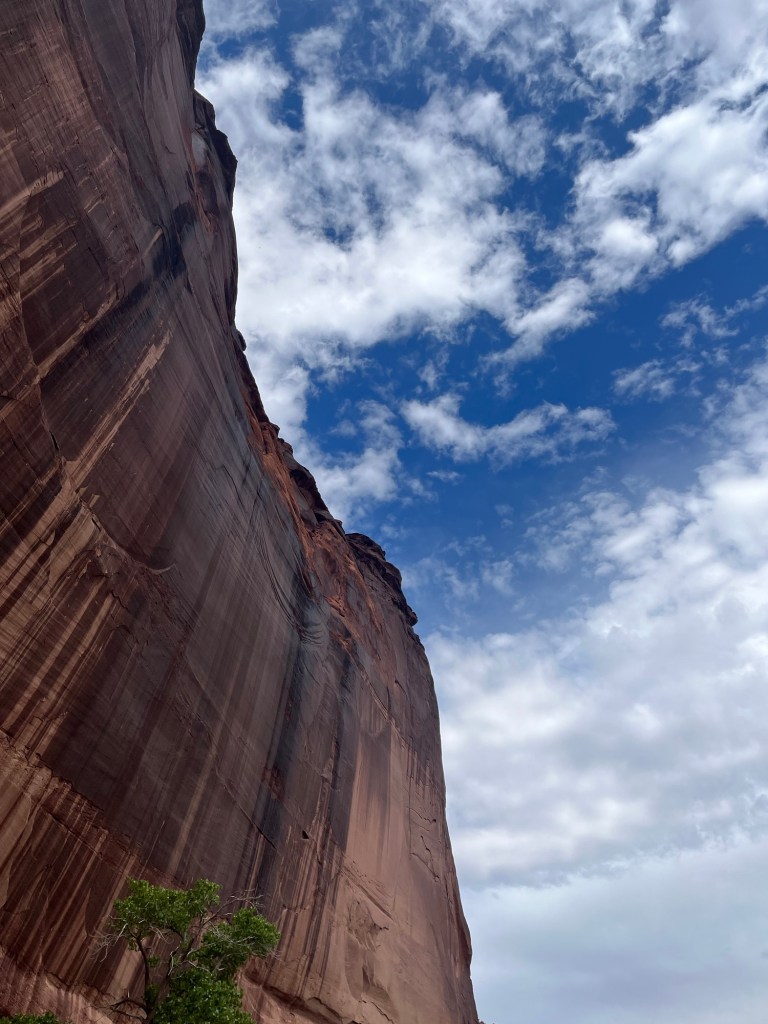
Ancestral Pueblos followed the Basketmakers. They are the ancestors of today’s Pueblo, Hopi, and Navajo peoples. These people built multistoried villages and kivas the remnants of which we see today. At some places in the canyon, the walls are more than 1,000 feet tall. Devonnia pointed out several “trails” leading up some of the walls-narrow ledges and ancient carved hand and foot holds. Her grandmother, who is 73 years old, still does guided hikes in the canyon and climbs those impossible- looking trails. We asked Devonnia if she climbed them, and she said, “Yes! I can’t be outdone by my grandmother!”
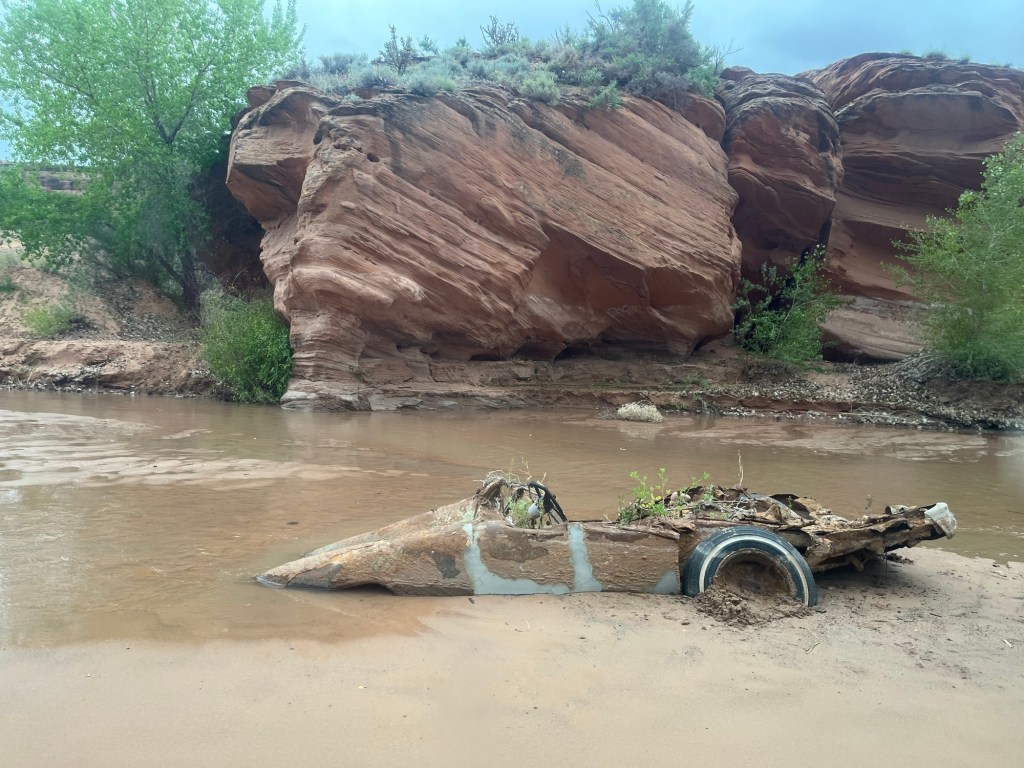
The canyon becomes impassable at certain times of year, as evidenced by the remains of an unlucky driver. There are no real roads and we were driving through water for much of our trip. We saw markers denoting quick-sand areas. This explains why most families only live there seasonally.
I will always remember this place. Devonnia holds stories that have been passed down in her family for many generations. We feel grateful that she is willing to share them with her guests, and we feel grateful to be welcomed on this land that is sacred to the Navajo Nation and their ancestors.










 On the Road