Friday, May 10-Sunday, May 12
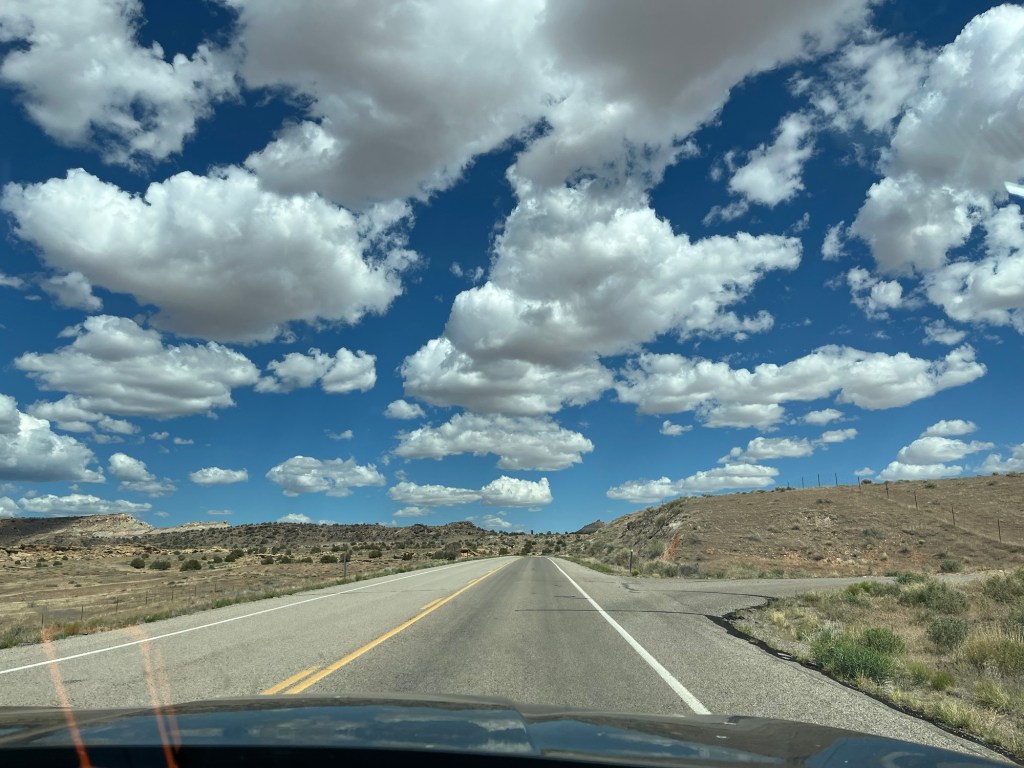
We spent Thursday night in Page, Arizona. Not much to report-it’s near Lake Powell, which we don’t see from our motel room. Friday morning is a lovely drive to Canyon de Chelly (pronounced Chay) National Monument. This is the second largest canyon in the US and is located in the Navajo Nation near the Four Corners region.


There are no public trails at Canyon de Chelly, but visitors may drive the rim and there are amazing views from the overlooks. We met some Navajo artists selling jewelry and art at some of the parking lots and had a chance to talk to them and buy some of their work.

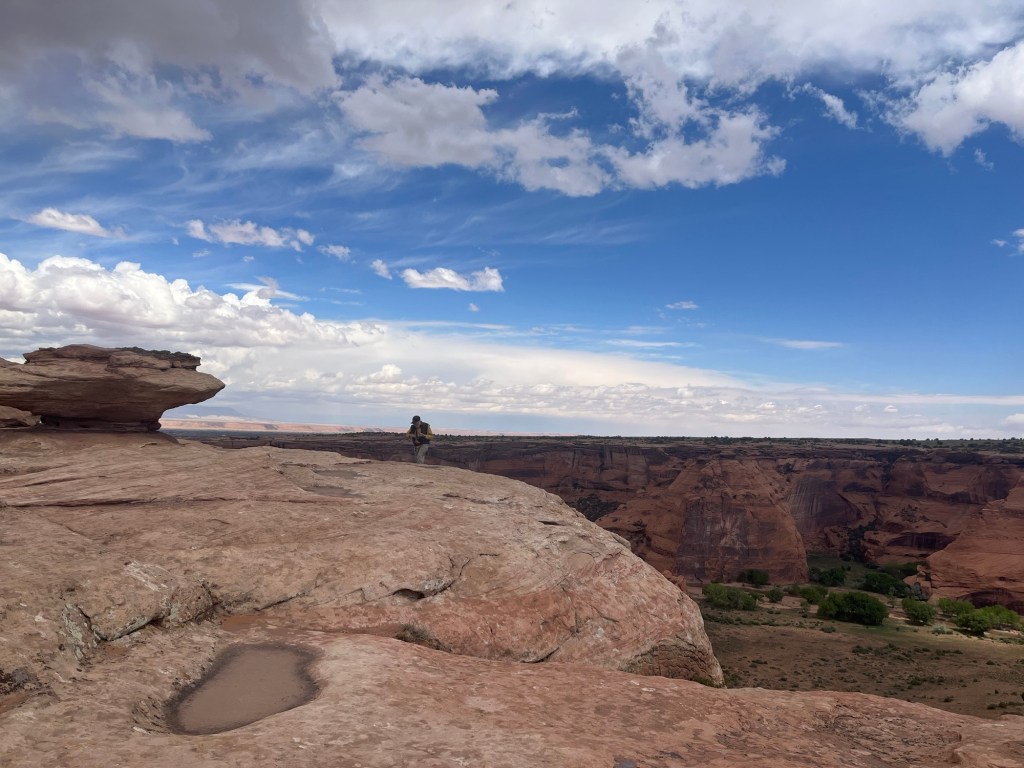

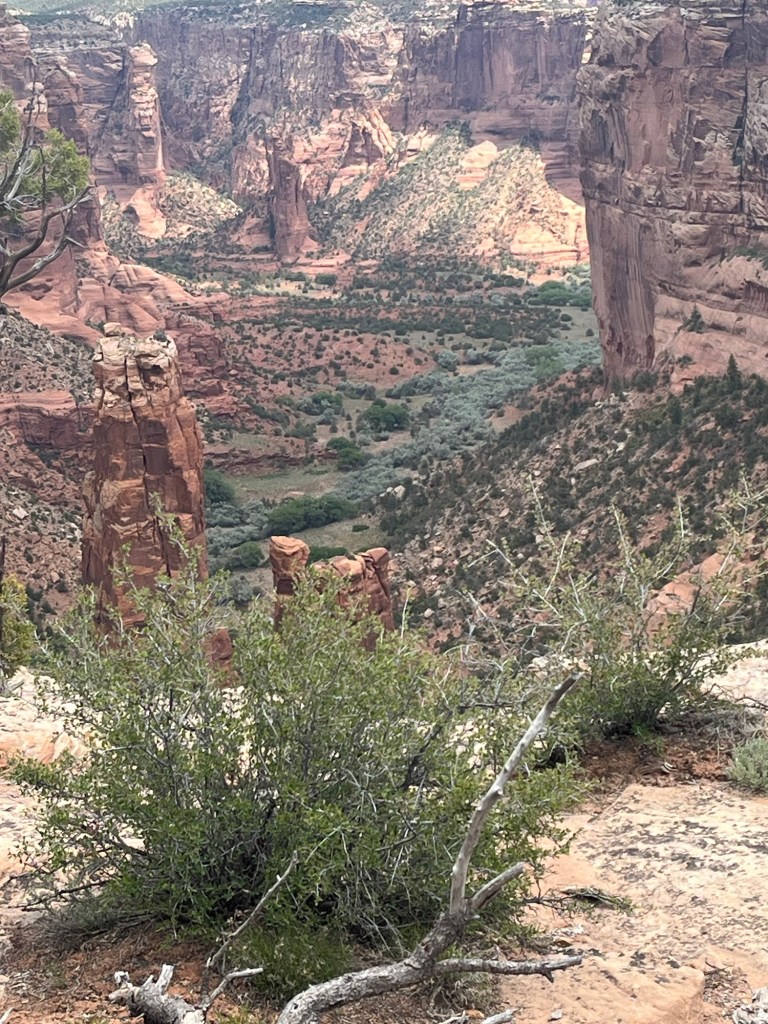
To go into the canyon, visitors must have a guide. The canyon is co-owned by Navajo residents and the Park Service. Guides must be Navajo residents of the canyon.
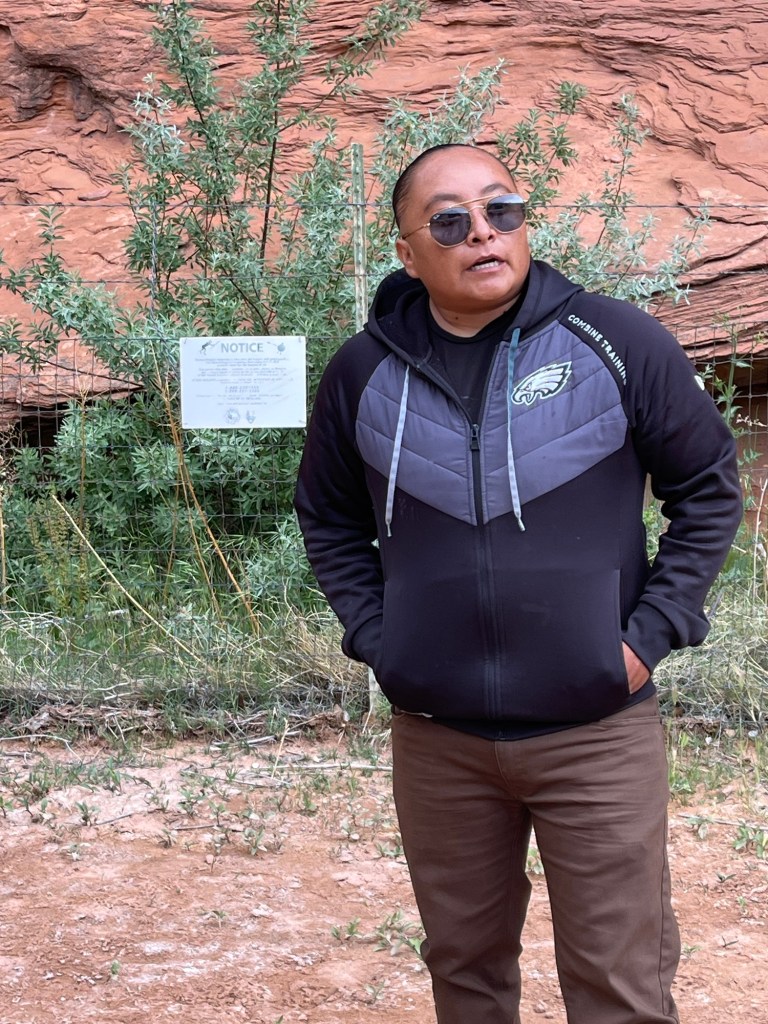
We decided to take a tour, and we are so glad we did. This is Devonnia, our guide. She took us and 3 other people on a 3-hour tour. She grew up in the canyon with her dad and grandparents. Today, there are about 60 families who own property there, but all except one woman live there seasonally. We discovered the reason for this on the tour. The landowners farm and keep sheep and horses, which are brought out of the canyon during the winter. The Navajo tribe is matriarchal. Land is passed on to the oldest woman in the family. In de Chelly, if there is no heir, the land reverts back to the Park Service.
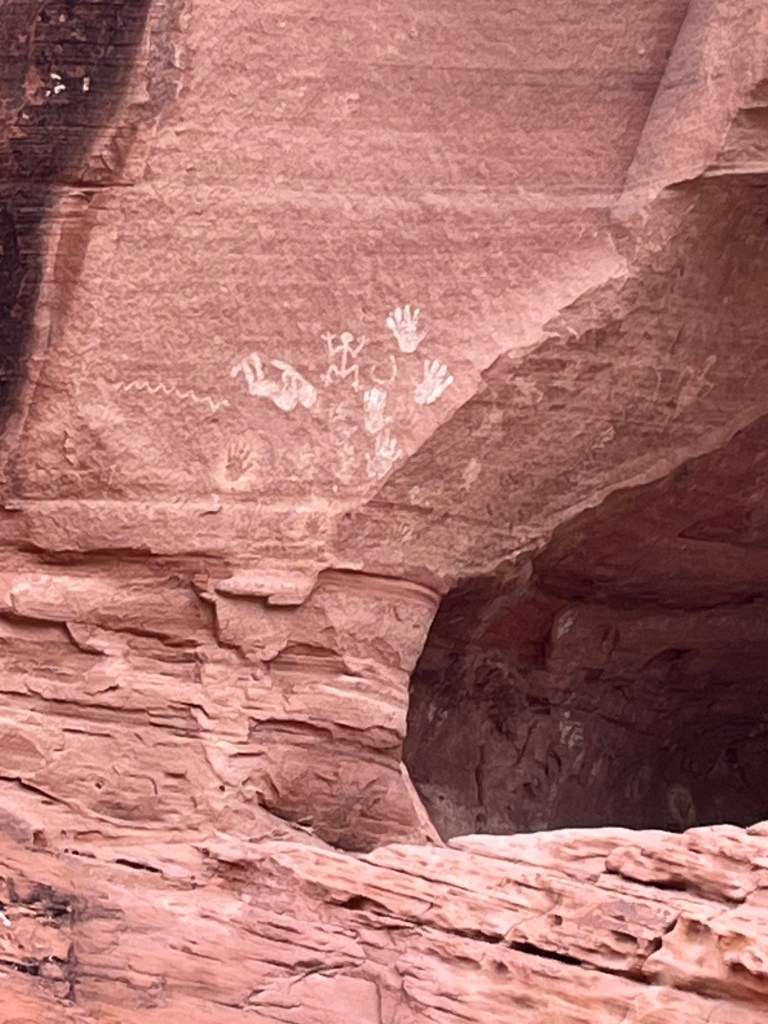
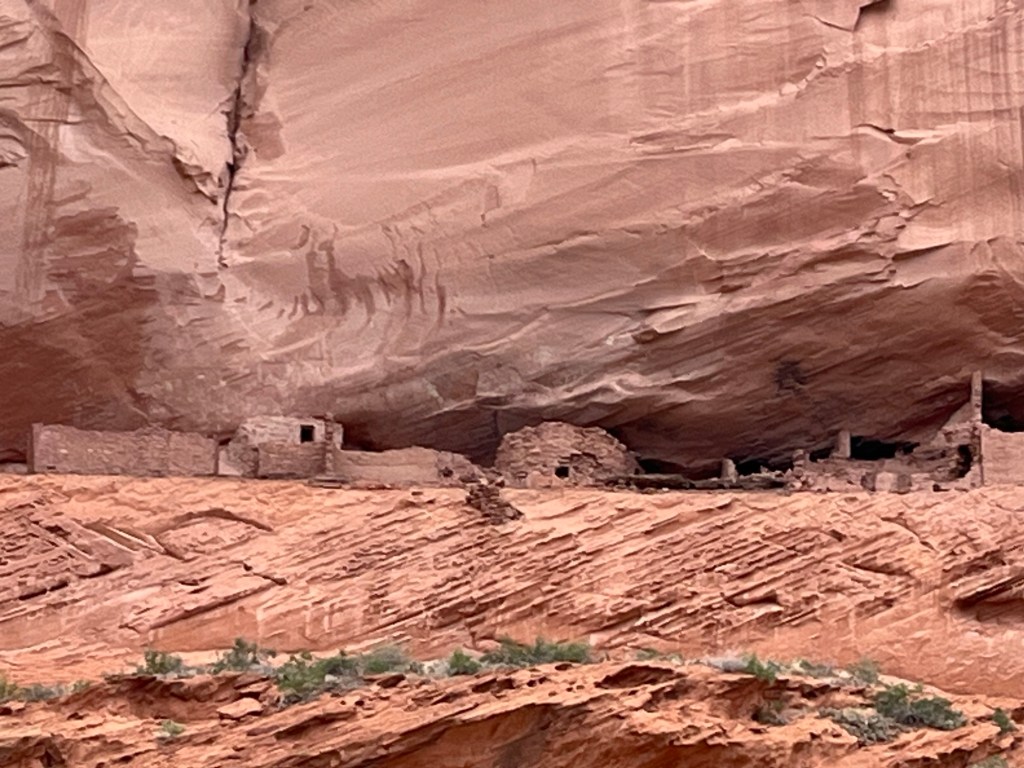
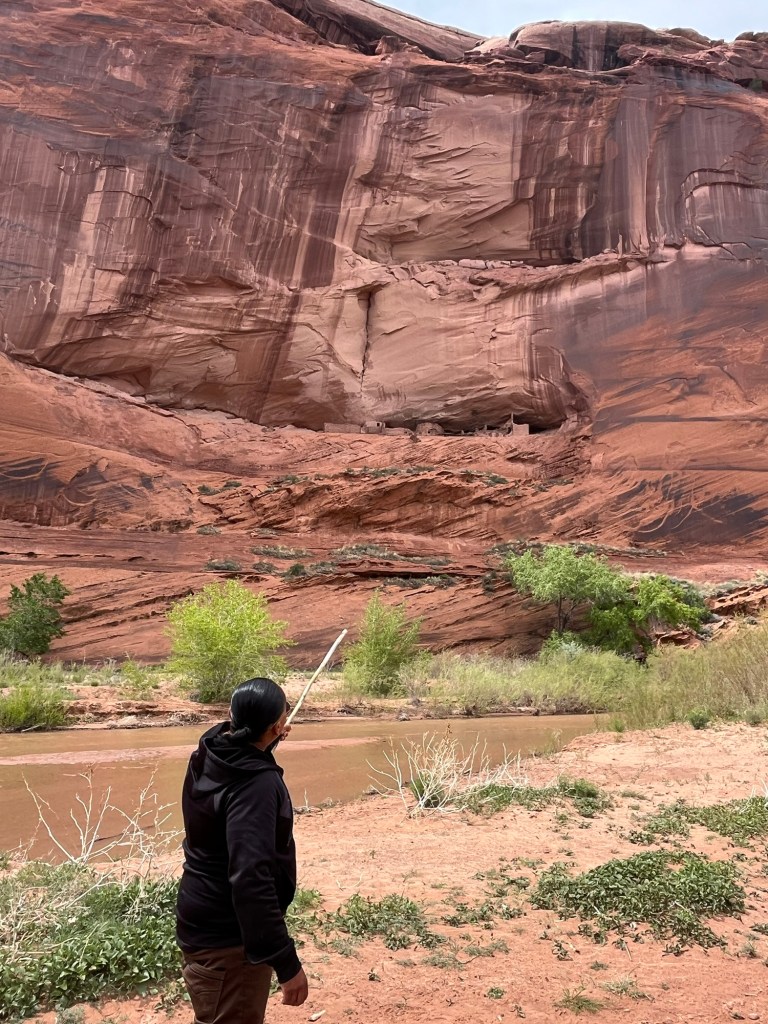
People have lived in this canyon for 5,000 years. The first inhabitants lived in the cliffs from around 2500 to 200 BCE and left images on the canyon walls to tell their stories. This site is thought to have been a birthing place. Kokopelli, the symbol of fertility, is shown here on his back-representing new life. Between 200 BCE and 750 CE a group called the Basketmakers, named for their weaving skills, began to farm and become more sedentary.
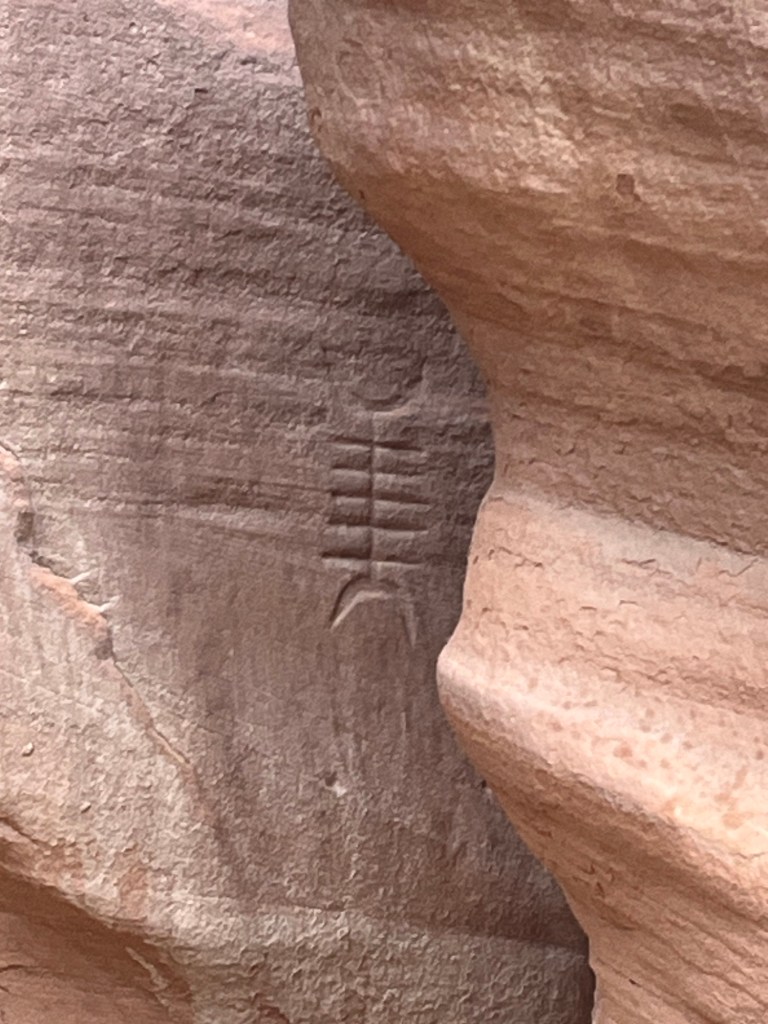
Devonnia pointed out this symbol, which she said was probably left here in the 1940s. It is considered graffiti by archaeologists, but she grew up with its lesson. She drew a picture of it in the dirt and told us the story that her grandmother taught her. It represents the transition from the world into which Navajos are born into the “glitter world” of modern culture. The lines between the two worlds represent culture, language, civility, ego and greed. If younger generations lose their cultural knowledge, their language, and the civility taught by the Old Ones, they will turn to the “me” culture and fall victim to a world of greed and materialism (glitter). Devonnia said she has witnessed the truth of this story in the younger members of the Nation who have fallen victim to drugs and alcohol and have lost their way. As she talked, I felt that this Truth is a truth for all cultures, and I thought about what I was taught as a child- “do not forsake your mother’s teaching,” and other similar Christian scriptures that remind us to hold onto the traditions and the values of our ancestors.
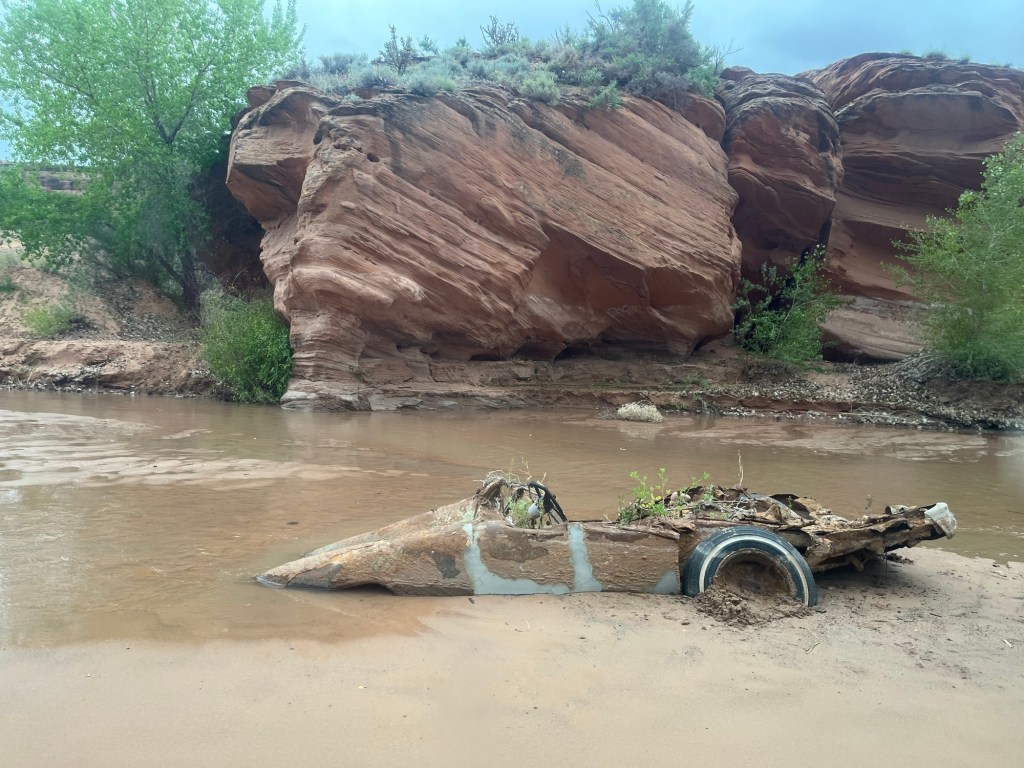
The canyon becomes impassable at certain times of year, as evidenced by the remains of an unlucky driver. There are no real roads and we were driving through water for much of our trip. We saw markers denoting quick-sand areas. This explains why most families only live there seasonally.
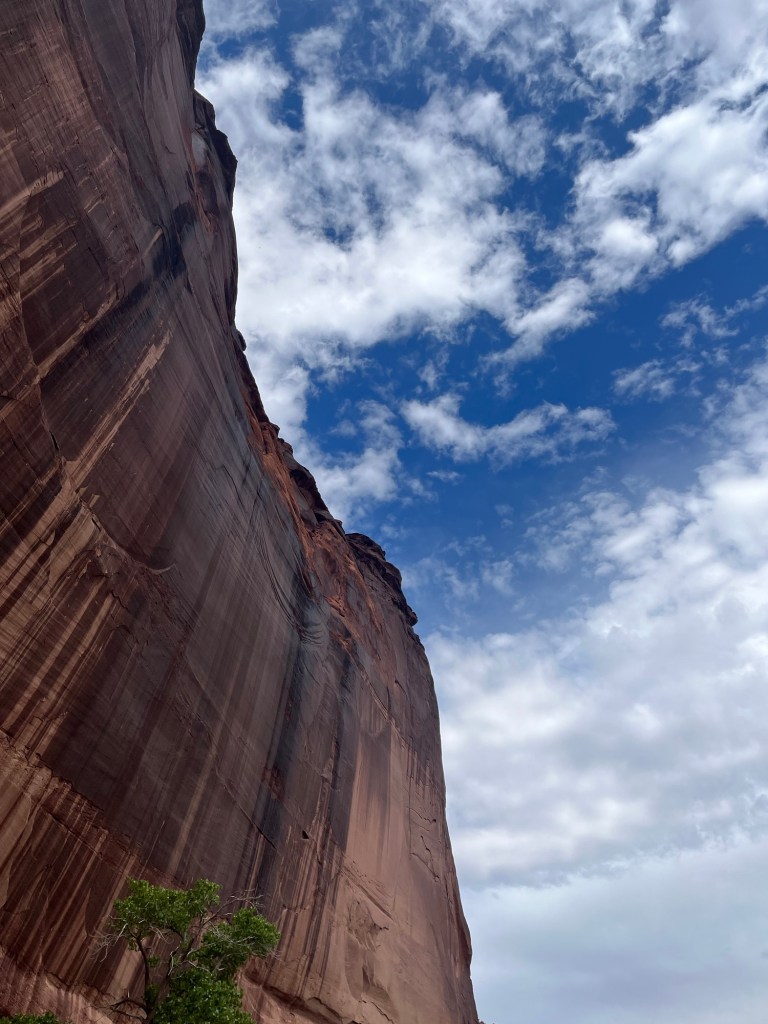
I will always remember this place. Devonnia holds stories that have been passed down in her family for many generations. We feel grateful that she is willing to share them with her guests, and we feel grateful to be welcomed on this land that is sacred to the Navajo Nation and their ancestors.
 On the Road