Saturday, April 21-Camp Rio, Mayhill, NM
Last night it was crazy windy and the tent was flapping and swaying back and forth so much we couldn’t sleep, so at 4:00am we gave up, packed up and left. We stopped in Ruidoso with the intention of visiting the Museum of the American West, but it was closed for renovation so we kept going to our next destination.
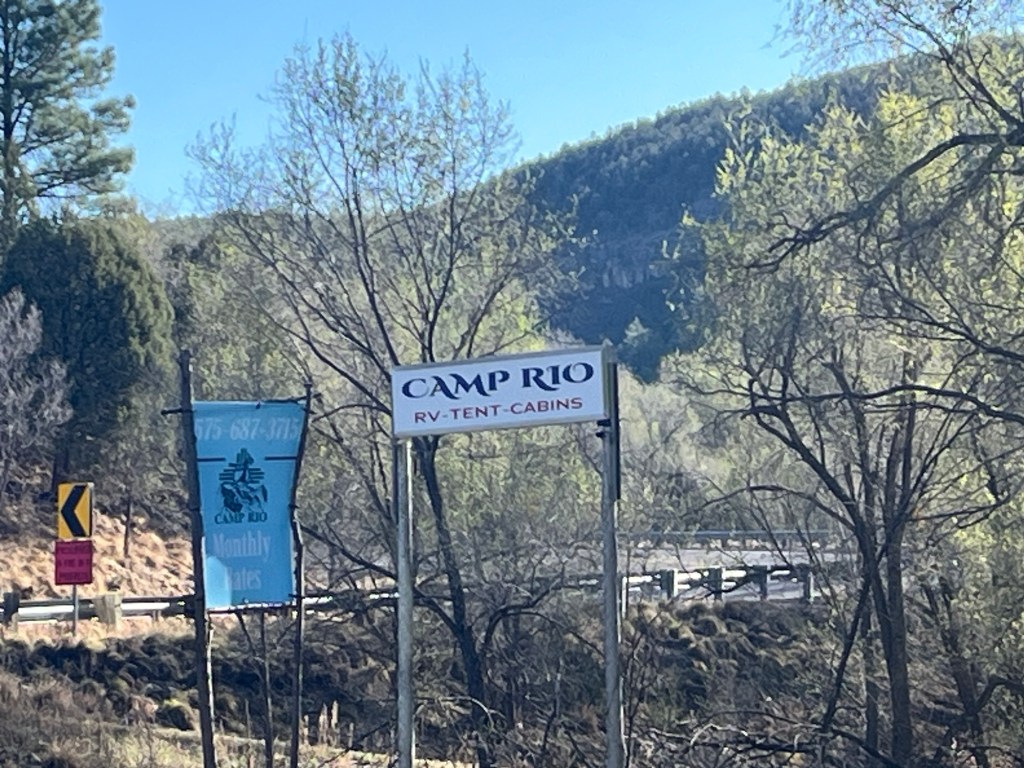
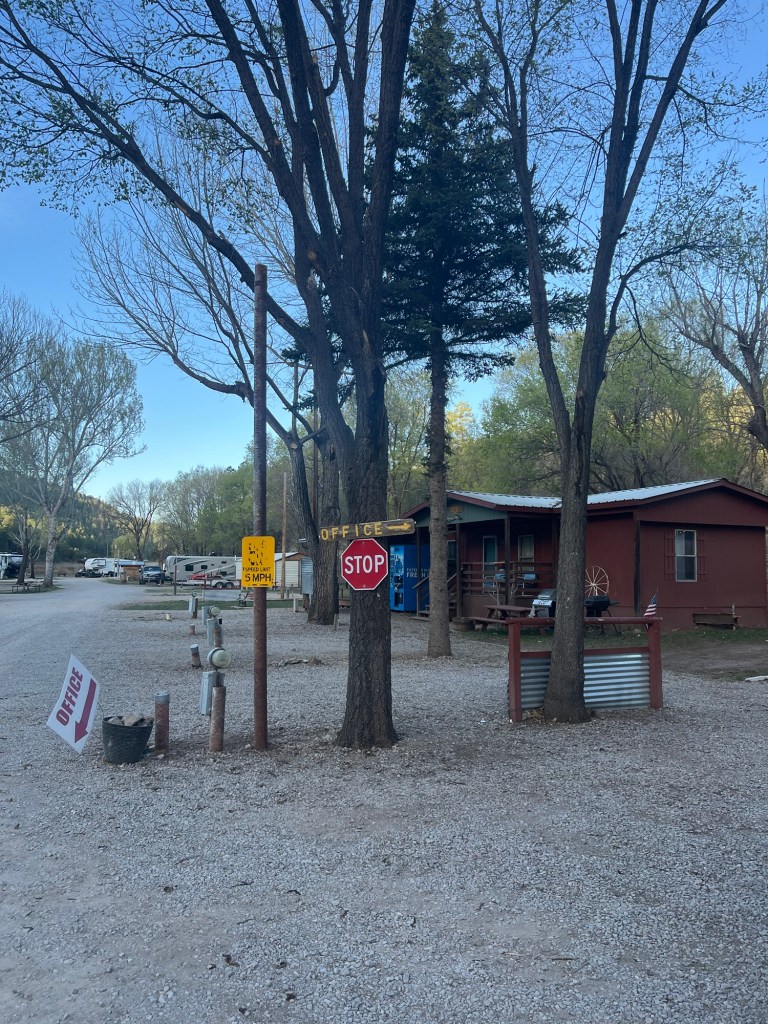
Camp Rio is a privately owned campground that clearly caters to RV camping (tent campers are in the minority these days!), but it’s pretty cool with a lot of rustic touches, and it’s also super clean.
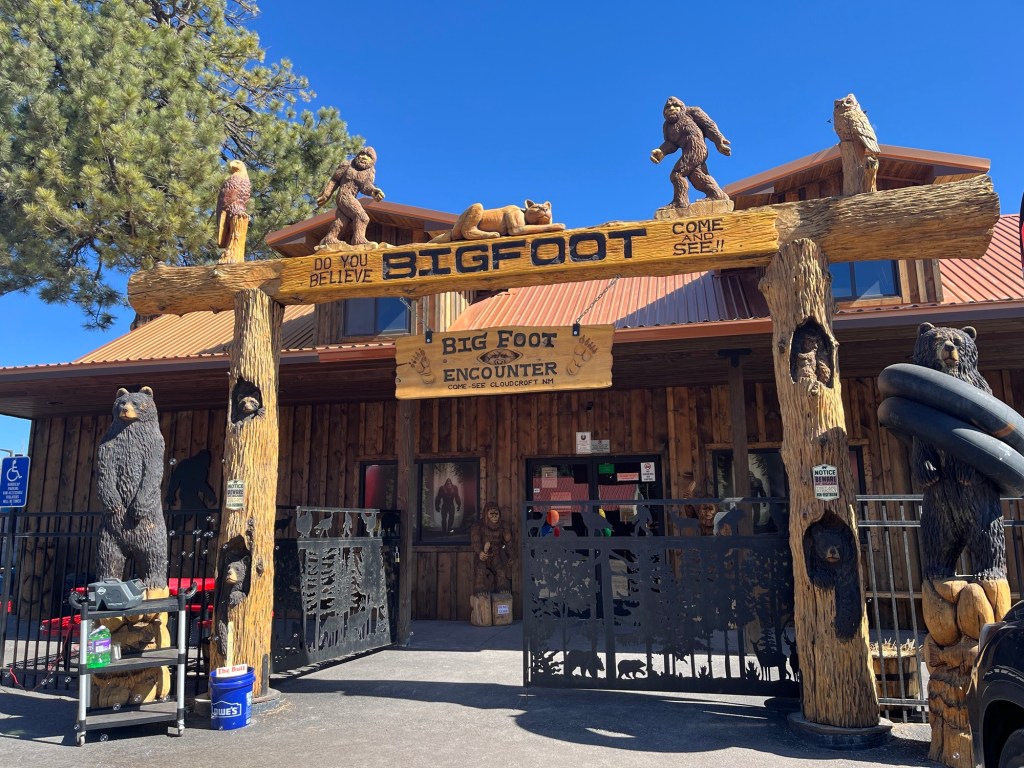
Once we’ve set up camp we decide to visit Cloudcroft-a small town about 15 miles away. Our friends Donna and Ellie have been giving us tips about our trip as they were recently in this area and Donna used to live in Cloudcroft, so we’re excited to see her old stomping grounds. It looks like an old western village (which I guess it is) that has been gentrified. One important feature: a Bigfoot Museum! I don’t know if we’ll have time to visit, but we did get a postcard.
We do a little shopping and find the local pub-it reminds us of Rollies.
Every available surface on the walls is covered with dollar bills.

After our sleepless night we’re feeling pretty wiped, so decide to go back to our campsite and take a nap. When we wake up it’s 6:30 and getting dark-we are up for a few minutes and go back to sleep until 6:30 the next morning! I guess we were really tired.
Sunday, April 22-White Sands National Park
I saw a post for this park on Facebook a while back and have been wanting to see it ever since. It does not disappoint.
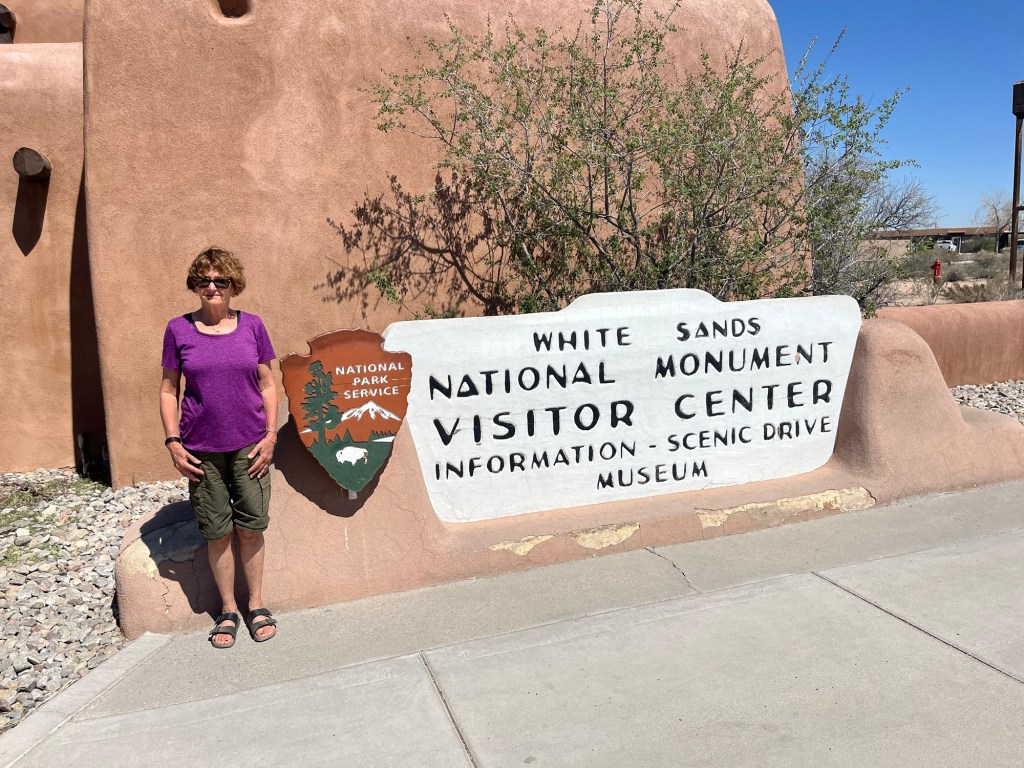
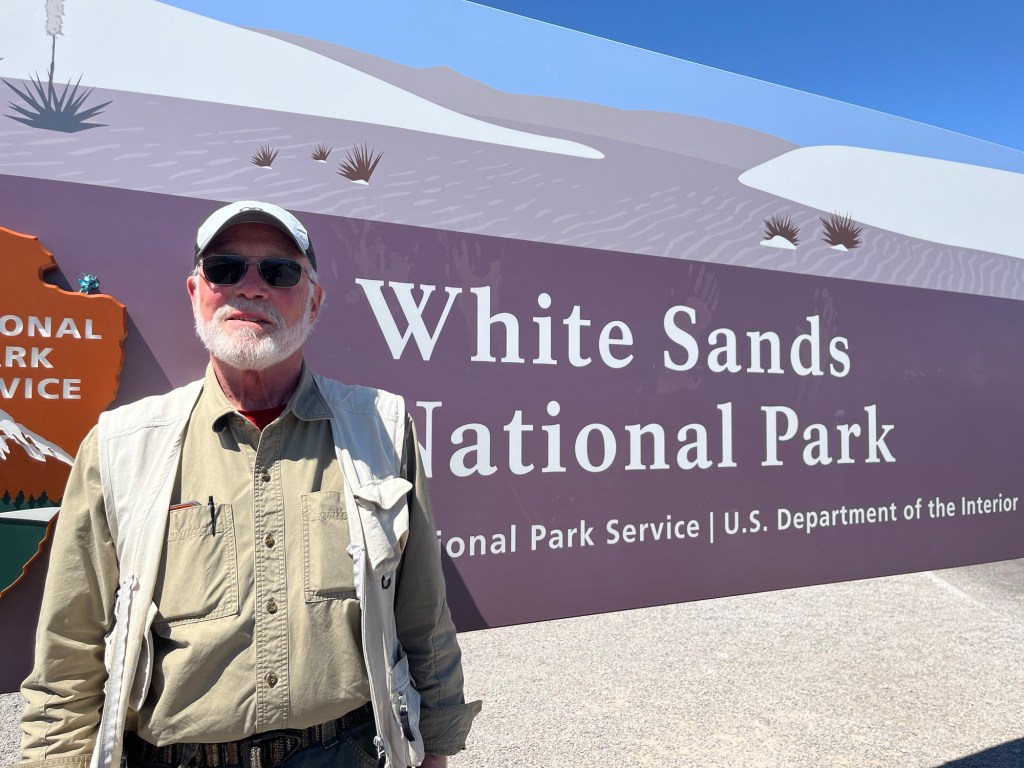

The park is located in the Tularosa Basin in the northern tip of the Chihuahuan Desert and features the largest gypsum dune field on earth. On July 16, 1945, scientists detonated the first atomic bomb about 75 miles north of the park. The area is now part of the White Sands Missile Range.
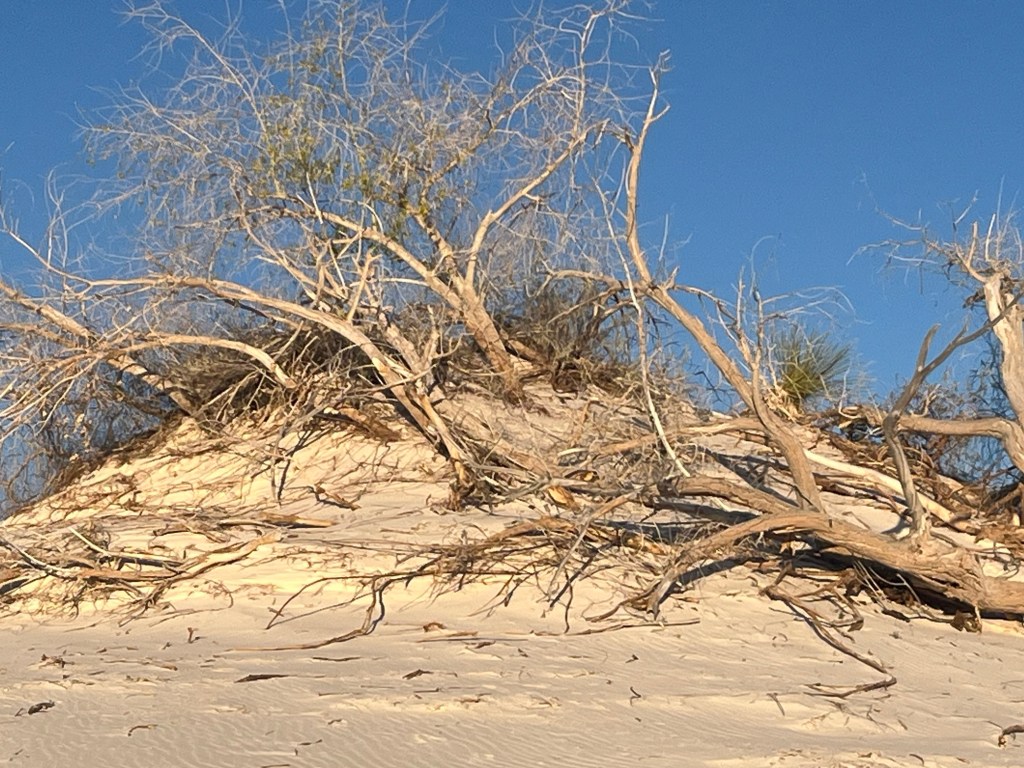
Two words come to mind: dramatic and surreal. We hike the Alkali Flats trail. It’s not flat-it’s 5 miles up and down giant dunes with mountain ranges before and behind us. There are a few other hikers, but mostly just us on an alien landscape that is indescribably beautiful. The “trail” is marked by metal stakes, and it’s important to follow them, because getting lost out here would be really bad…everything looks the same and finding the way back would be impossible.
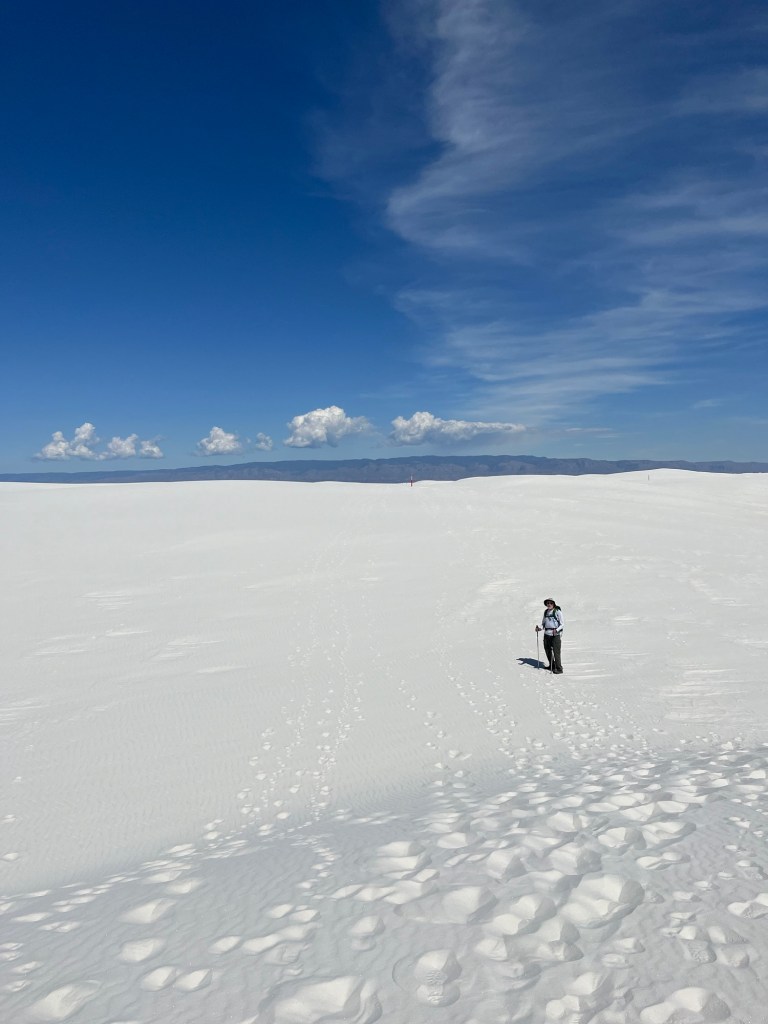
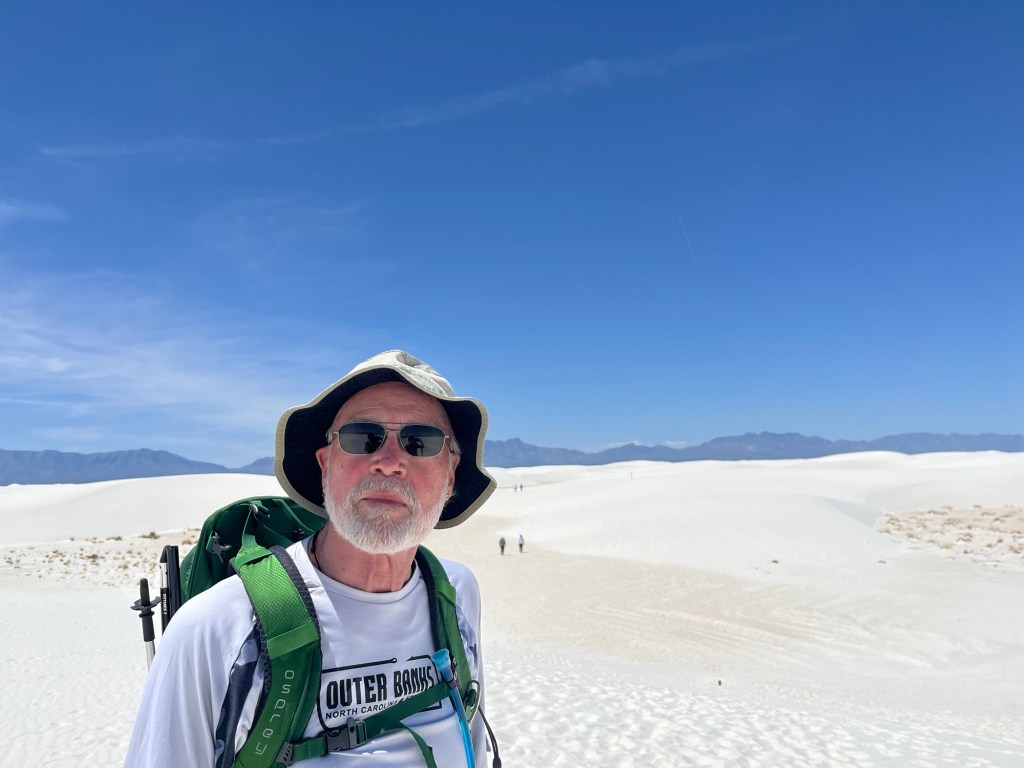
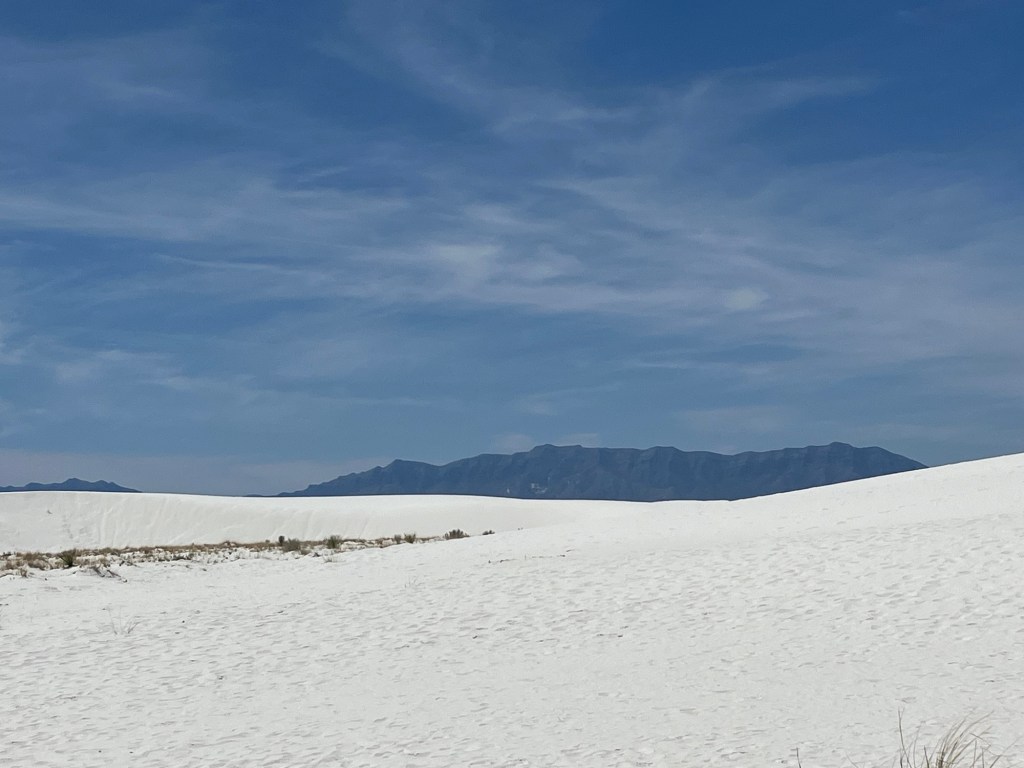
The weather is perfect-it’s about 73 degrees and brilliantly clear.
This place is awesome in every sense of the word.
Monday, April 23-Earth Day
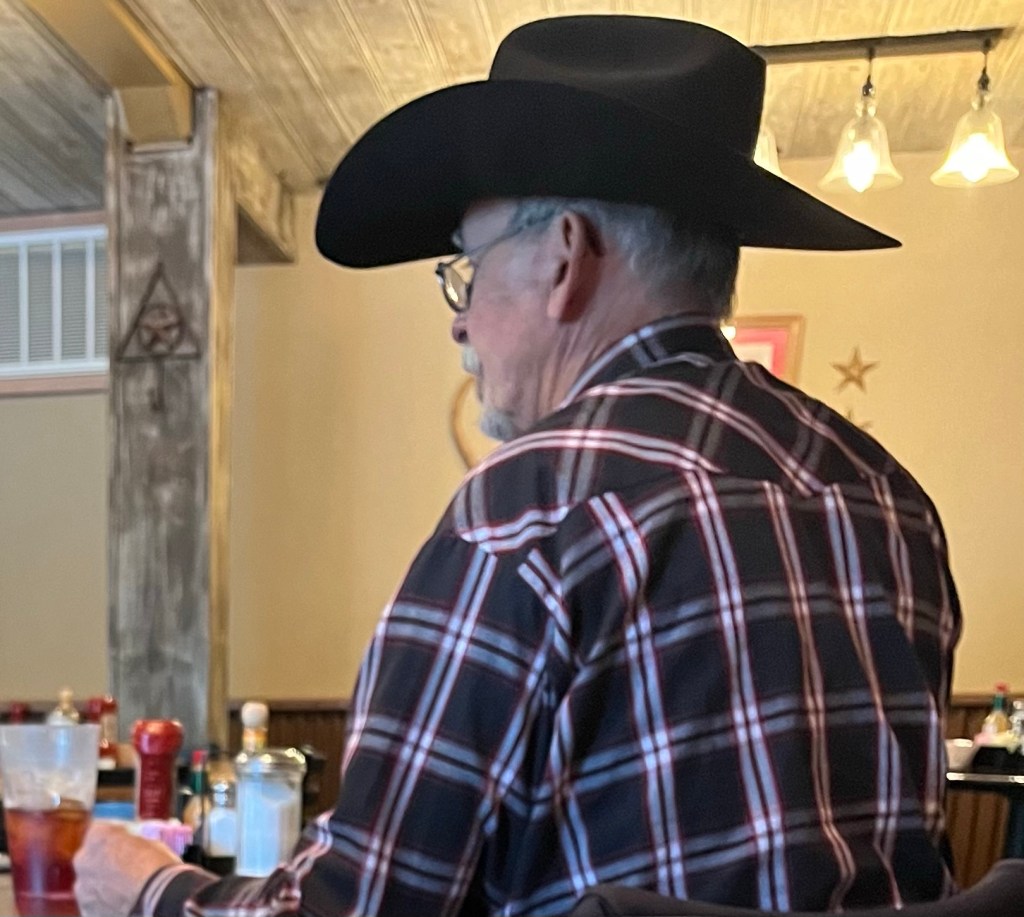
We started the day with breakfast at Big Daddy’s. We heard a conversation between this cowboy and his buddy.
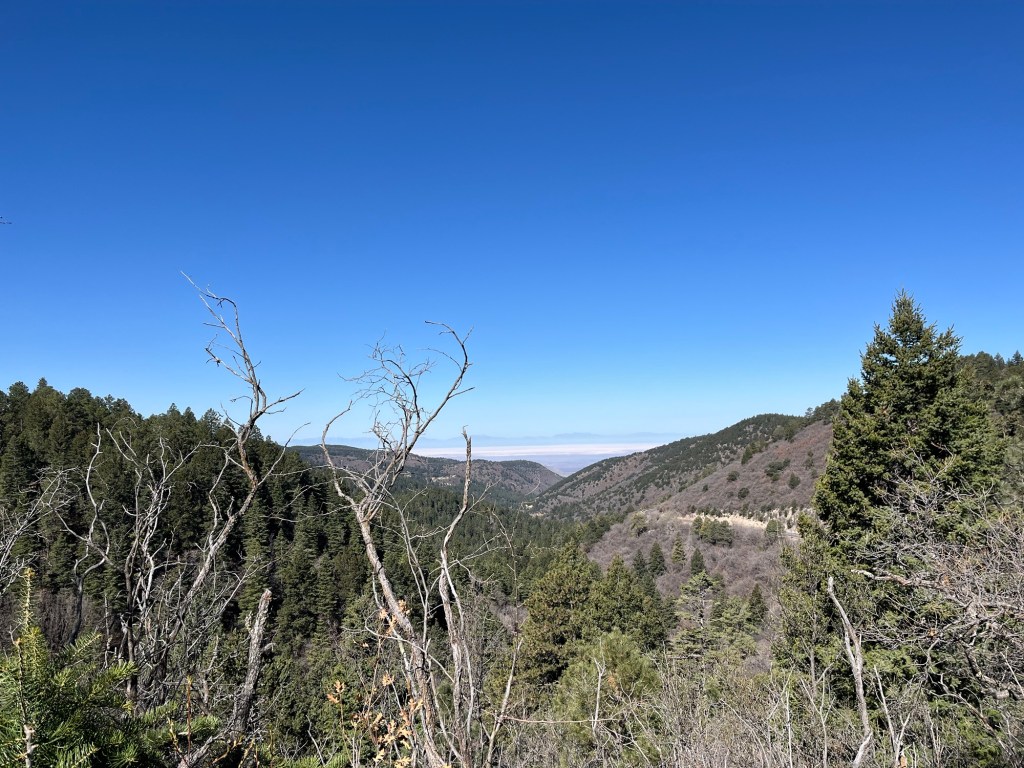
I feel so lucky to be celebrating Earth Day in a part of the earth that is largely unspoiled. The drive down the mountain from Mayhill and Cloudcroft to Alamogordo (home of the world’s largest pistachio, which we don’t have time to see, sadly) is breathtaking.
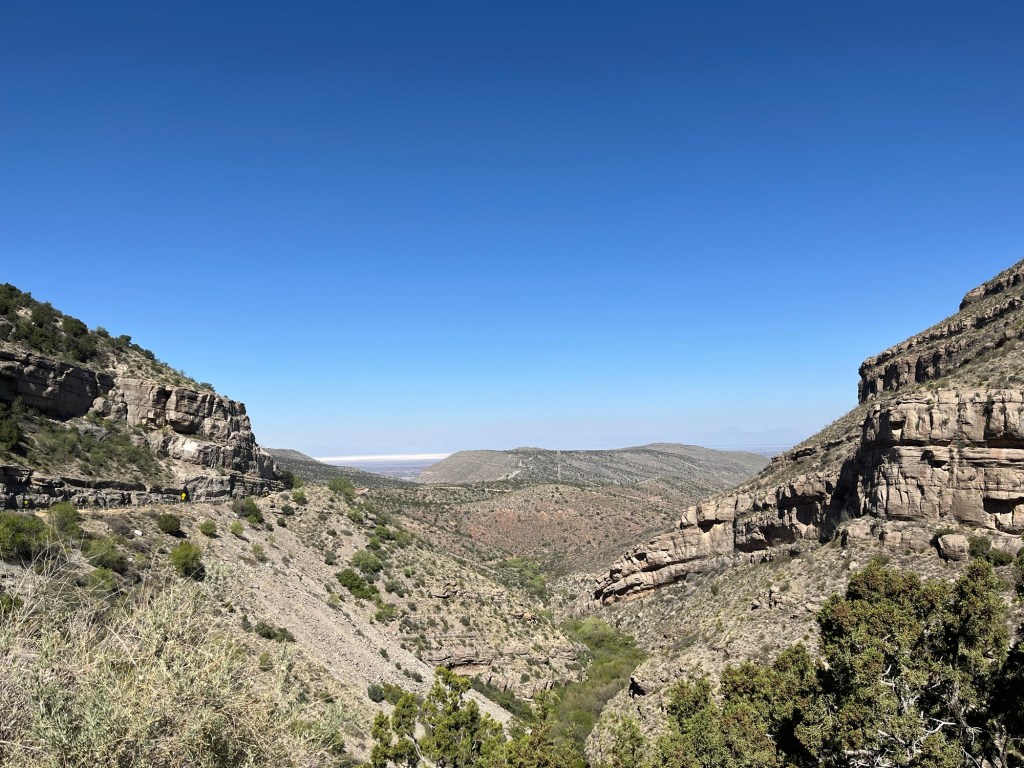
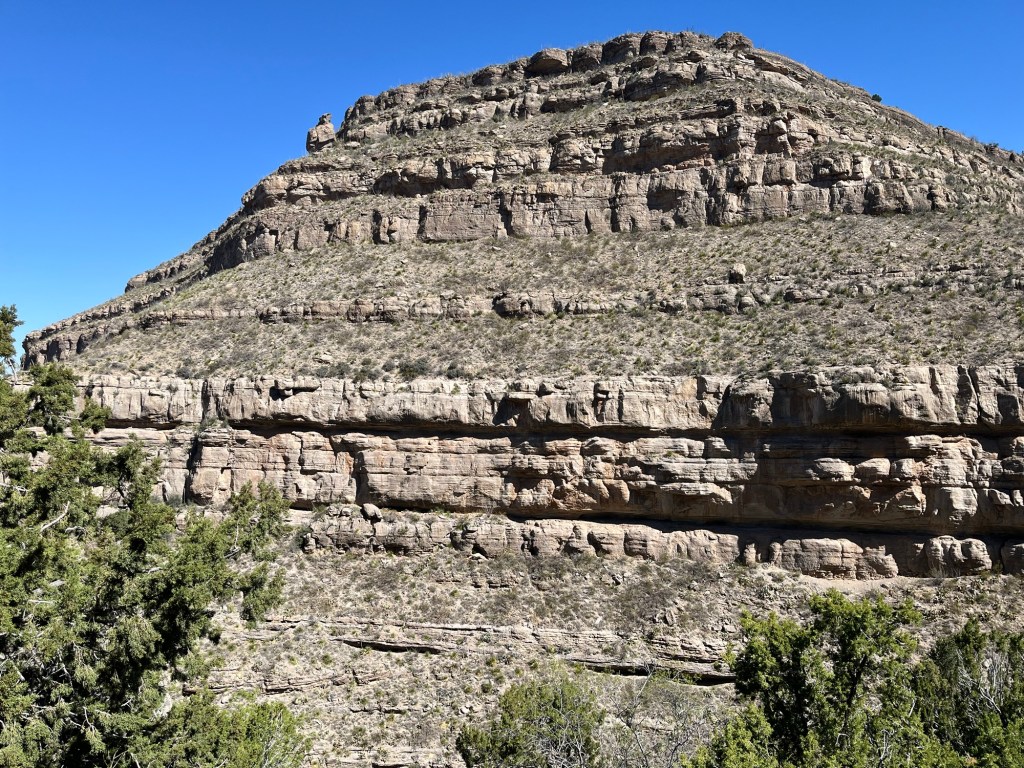
At one of the overlooks we get a view of the Fresnal Shelf, a prehistoric camping area. This site was a seasonal shelter for ancient hunter-gatherers that once inhabited the Sacramento Mountains here in Southern New Mexico. According to archeological analysis of artifacts found here, this shelter was occupied in the late summer and early fall months between 6000 and 500 BCE. Findings include stone tools and basket fragments, but no pottery, as ceramics were not used until later. Andy and I stood for quite a while gazing at these overhangs in the mountainside and trying to imagine the people that would have lived and hunted there.
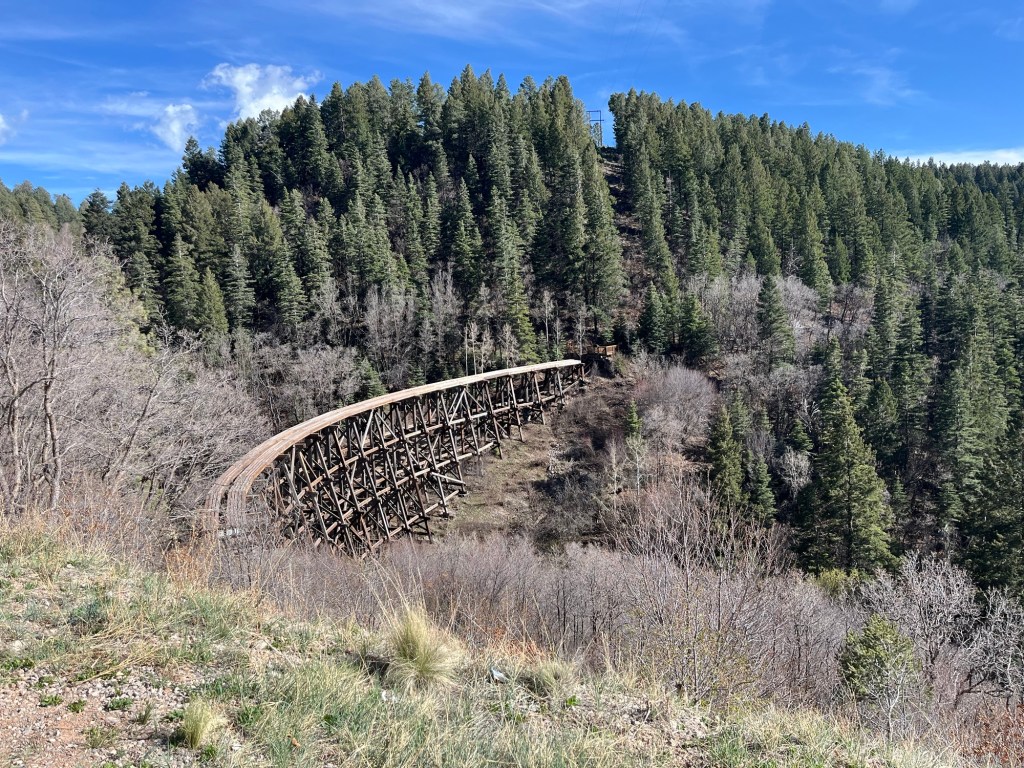
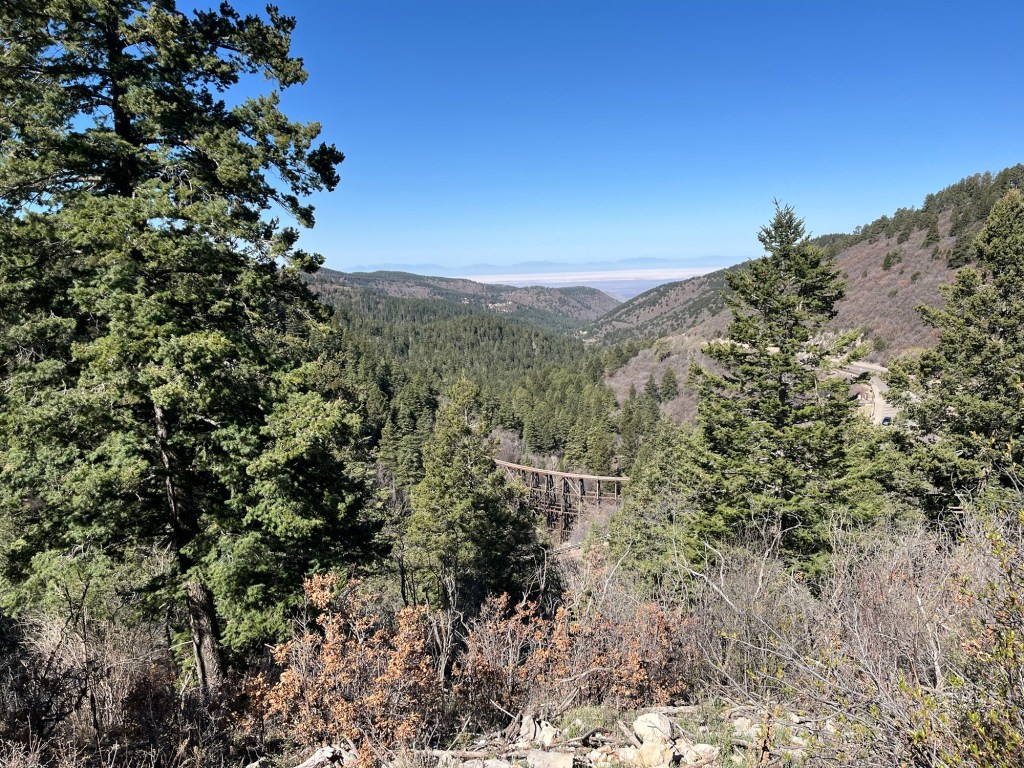
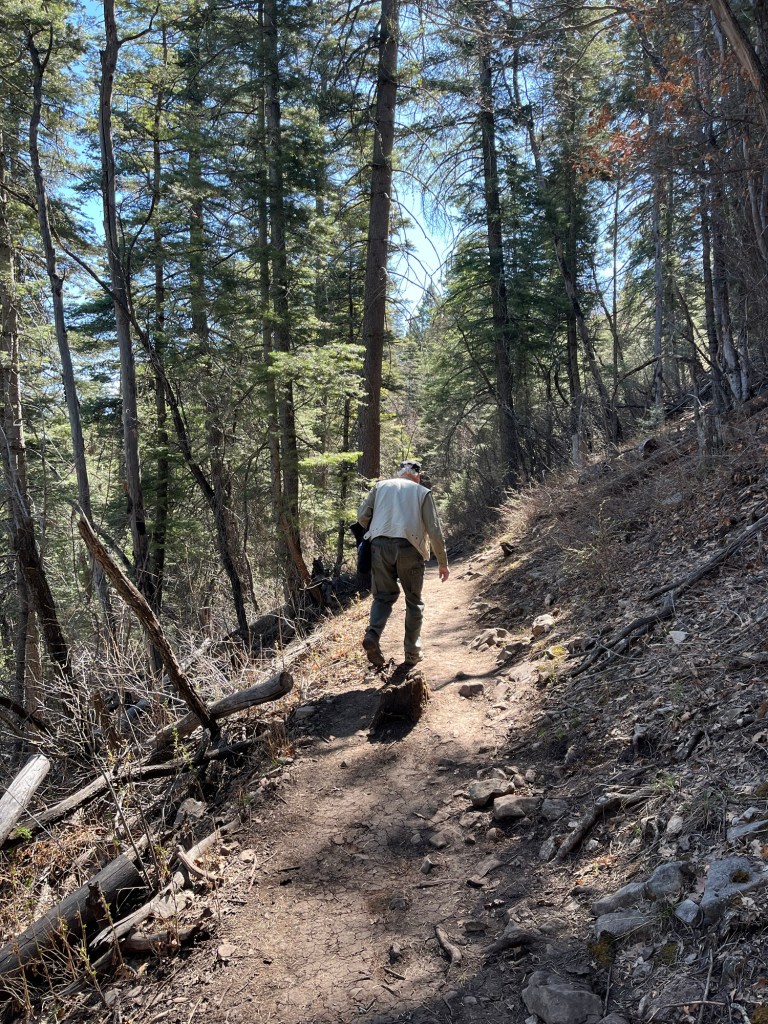
Today, on Donna’s recommendation, we take a hike on the OSHA trail in Cloudcroft. It was supposed to be a 2.2 mile loop, but we couldn’t quite read the directions and ended up hiking about 5 miles. It was a pleasant forest walk and we got a good view of the restored train trestle that is part of the Cloud-Climbing Trestle Trail.
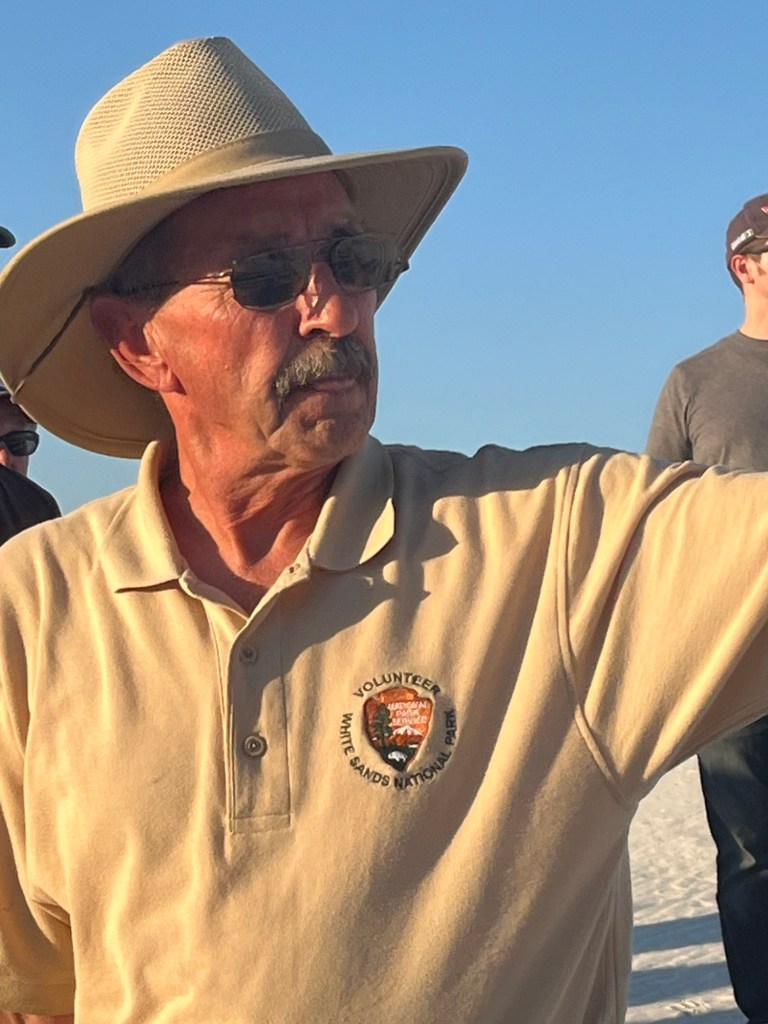
Later in the afternoon after dealing with some housekeeping chores (even on vacation the laundry must be faced), we return to White Sands for a sunset walk through the dunes. Our leader is Ranger Joe who is very knowledgeable about life in this place. He talks about plants and animals (their adaptive abilities are impressive), geology (these dune fields are made of gypsum that washes down from the Sacramento and San Andres Mountain ranges and is broken down by wind and time), archaeology (mammoth, saber tooth tiger and dire wolf tracks have been found here), and the important recent discovery of human footprints left at during the Ice Age; 23,000 years ago. Scientific study of these tracks proves that humans and Ice Age animals lived together here for 10,000 years, and these findings were the impetus behind the change in status of White Sands from National Monument to National Park.
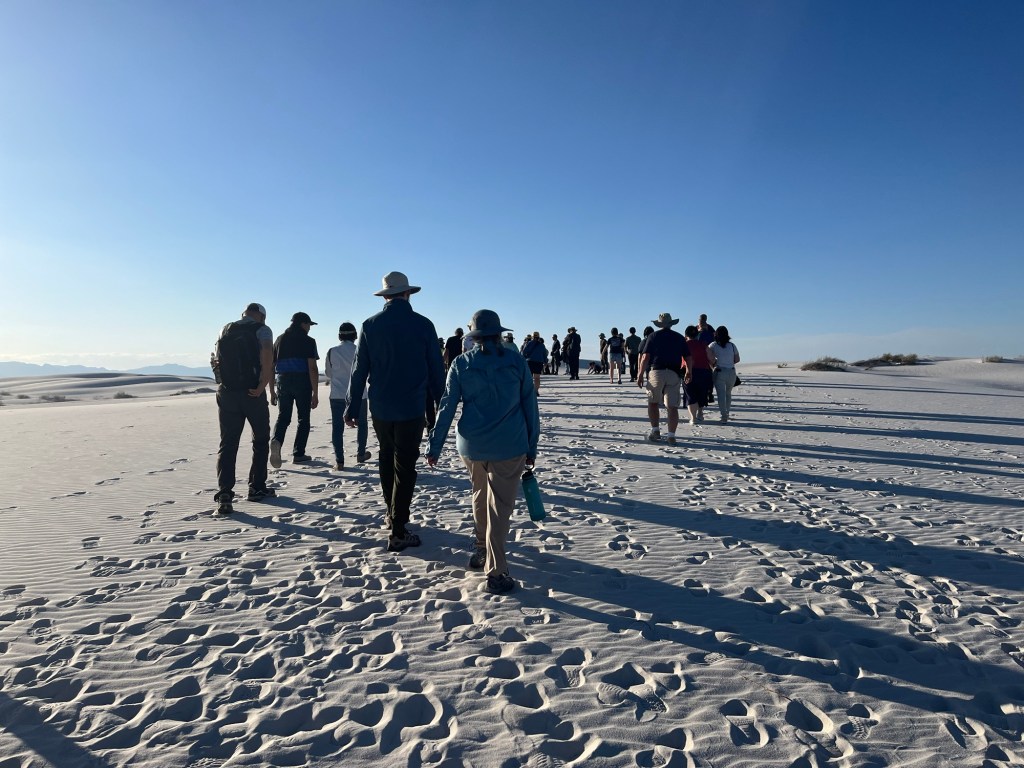
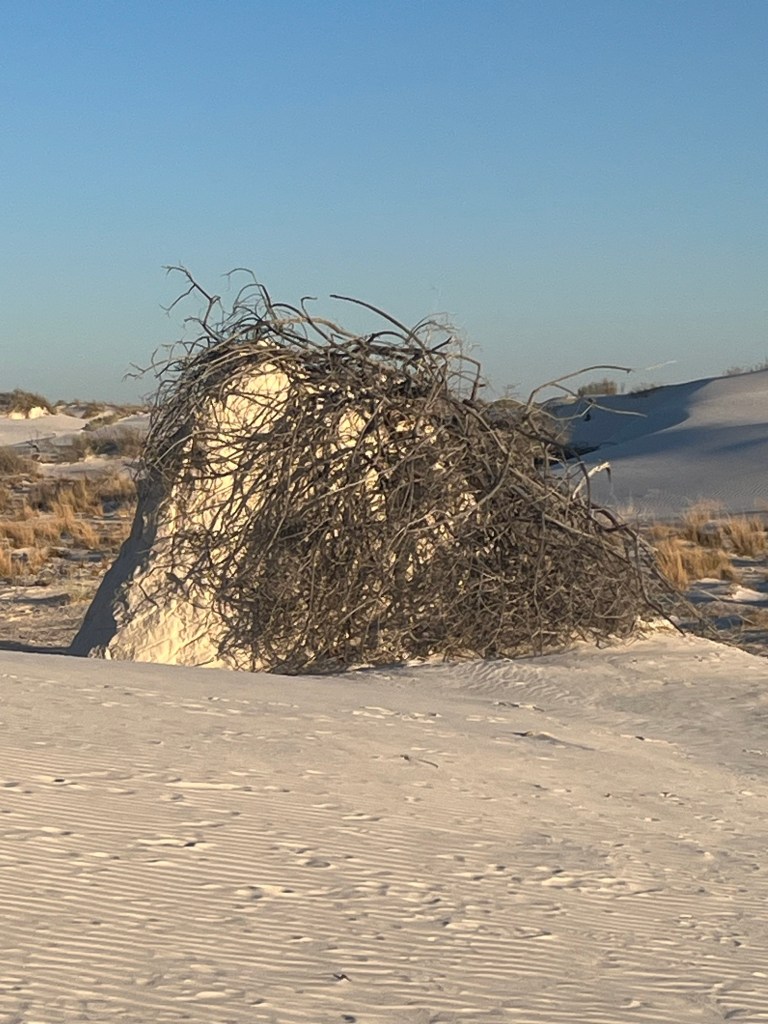

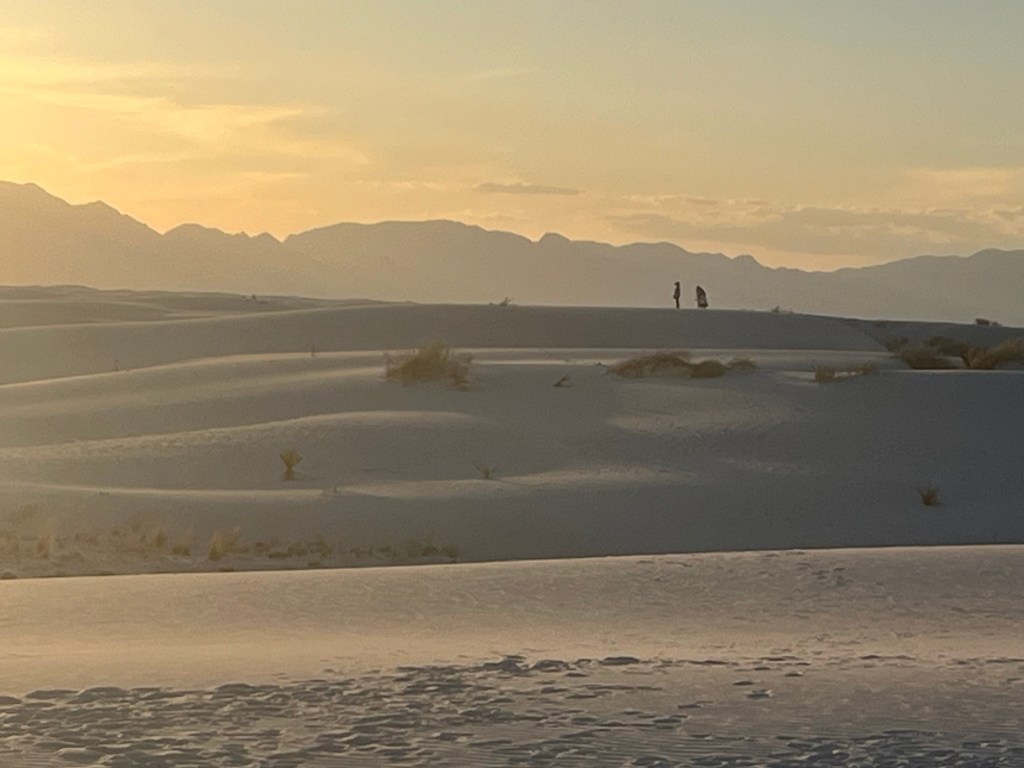
Joe’s talk ends just as the sun starts to go down and the moon rises.
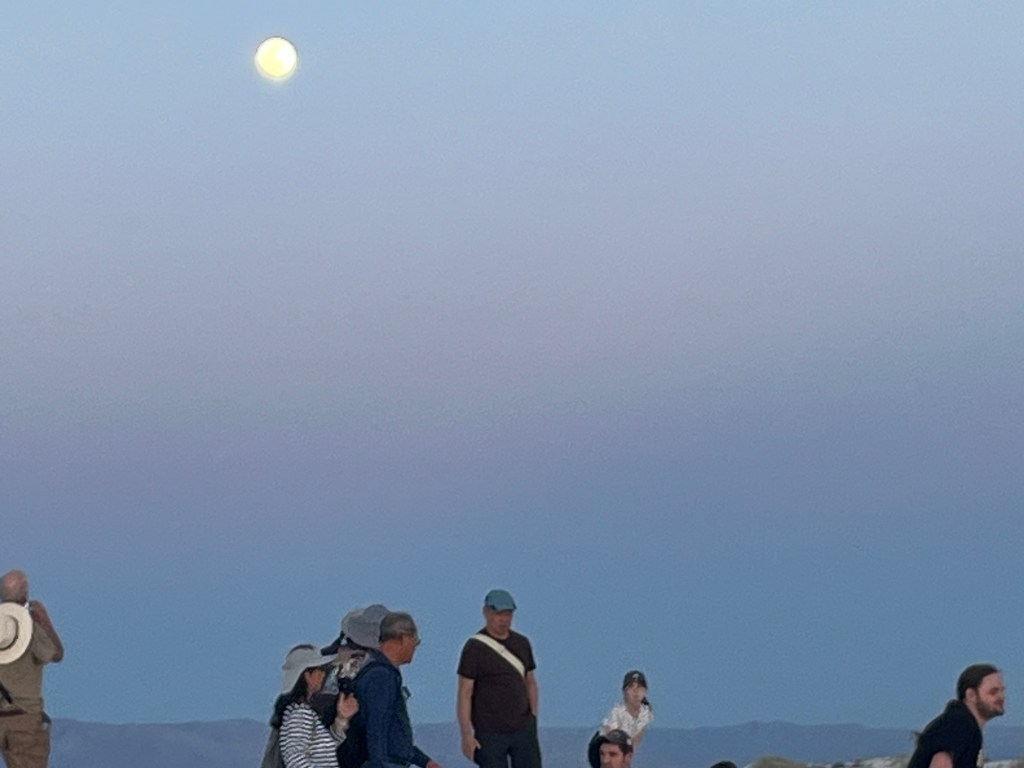
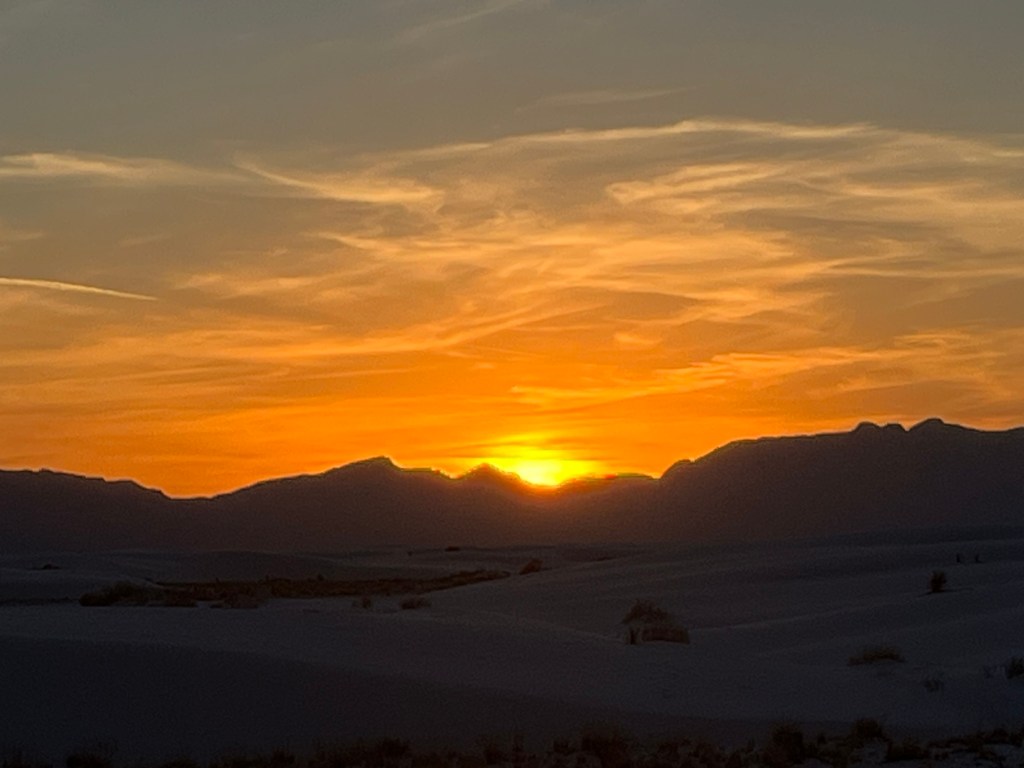
I took about 100 photos, but none of them begin to capture what we experienced.
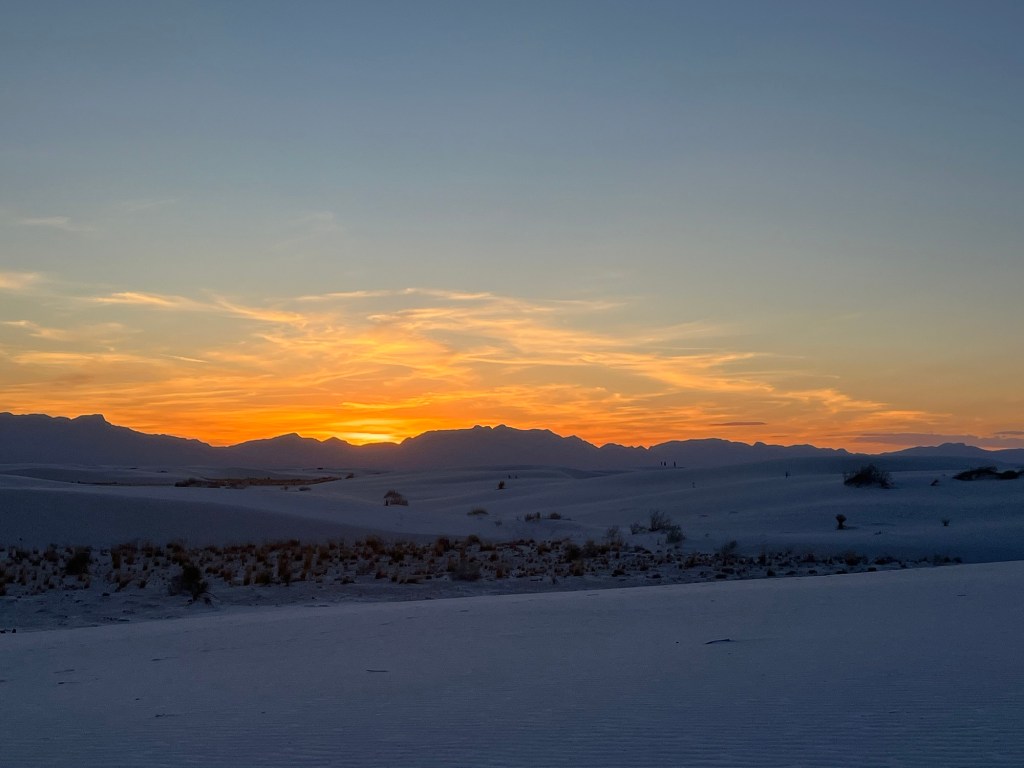
This park ROCKS!

 On the Road